The Month of the Holy Rosary
1. We should say the Rosary devoutly every day. This beautiful prayer
is very pleasing to Our Lady, and the church is particularly anxious
that we should recite it during the month of October. Families which say
the Holy Rosary together can hope for a special blessing from God and
for the maternal protection of Mary.
If possible, every family should gather
together in the evening and recite the Rosary before an image of our
Blessed Mother. If the parents set an example, their children will join
them. It is consoling to come together after the toil and trouble of the
day in order to confide our cares and hopes to Mary.
Do you
say the Rosary every day? If you have neglected this pious practice,
begin today. Do not plead lack of time. There is time for so many other
things, so surely there is time to pray and to entrust ourselves in a
special way to the protection of our heavenly Mother. The practice of
reciting the Holy Rosary will win for you the blessing of God and the
patronage of the Blessed Virgin.
2. One of the main advantages
of the Rosary is that it enables us to unite with our vocal prayer
meditation on the principal mysteries of our faith. During each decade
we should meditate briefly on one of these mysteries. In this way our
faith will be enlivened and we shall be roused to imitate in our lives
the example of Jesus and Mary.
The Rosary is composed of the
Church’s most beautiful prayers – the Our Father, which Jesus Himself
taught us to say when addressing our heavenly Father, and the Hail Mary,
which consists of the Angel’s greeting to the Blessed Virgin when he
came to announce to her that she was to be the Mother of God, of the
inspired words of St. Elizabeth on the occasion of the Visitation, and
of the moving plea for mercy, both now and at the hour of our death,
which the Church places upon the lips of her sinful children. Each
decade concludes with the short hymn of praise in honour of the Blessed
Trinity: “Glory be to the Father and to the Son and to the Holy Ghost;
as it was in the beginning, is now, and ever shall be, world without
end. Amen.” This prayer expresses the two principal mysteries of our
faith, namely, the unity and trinity of God, and, in an indirect
fashion, the incarnation of the Second Divine Person.
If we think of all this when we are fervently reciting the Rosary, it will prove to be a treasury of grace.
3. It is untrue to say that the Rosary is a monotonous prayer in that
it necessitates a constant repetition of the same formulae. In the first
place, recitation of these prayers should be accompanied by meditation
on the principal mysteries of our religion. Secondly, if we are inspired
by love, the repetition of the same words can draw from them each time a
new significance. The Christian who loves God and His Divine Mother
will be happy to call his heavenly Father with filial confidence and to
pray to the Blessed Virgin with trust in her maternal protection. An
affectionate son does not find it boring to speak with his own mother.
Showing posts with label Mary. Show all posts
Showing posts with label Mary. Show all posts
Wednesday, 1 October 2014

Friday, 15 August 2014
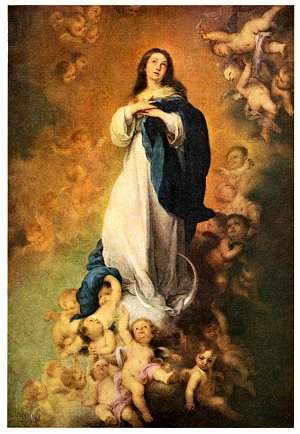
The Assumption of the Blessed Virgin Mary - Cardinal Bacci
The Assumption of the Blessed Virgin Mary
1. It is generally believed that Our Blessed Lady died, since she would not have wished to escape death any more than her divine Son did. Our Lord, however, had seen her sharing in His agony and death upon Mount Calvary, and He willed that her own death would be so peaceful as hardly to justify the name.
The just die in the love of God and the martyrs died for the love of God. But Mary died consumed by the love of God. It was not disease which brought an end to her life, but love. Her love for Jesus was more ardent and more perfect than that of any other creature. She loved Him when she held Him in her arms in the stable at Bethlehem, when she fled with Him into Egypt, and when she offered Him in the temple to His heavenly Father. She loved Him when she found Him after He had been lost and when she looked after Him in their home at Nazareth. She loved Him as she followed Him to His death on Calvary. She loved him in the joy of His Resurrection and, subsequently, of His Ascension into Heaven. Jesus desired her to remain on earth for a while to comfort the infant Church and to initiate the loving patronage which she would exercise over it in Heaven. Her love grew from day to day until it entirely consumed her and her immaculate heart could no longer contain it. Mary fulfilled in a most perfect manner the Creator's command to His creatures to love Him with all their hearts and with all their strength. Consequently, her love reached such a peak that her soul in its final ecstasy glided from her body.
Let us ask our Mother, Mary, to help us to die with the love and grace of God in our hearts, and with the names of Jesus and Mary on our lips.
2. Even as Christ by His own power rose from the grave, so by reason of His intervention the soul of Mary was reunited, after a short separation, with her body, and she was taken up body and soul into everlasting glory. It was fitting that this privilege should have been bestowed on the Mother of God. It would have been unbecoming for the immaculate flesh in which the divine body of Jesus was formed to have been allowed to corrupt in the grave. It was fitting, too, that she who was to be proclaimed Queen of Angels and of men should have come immediately to her throne of glory with her humanity integral and unimpaired. Her resurrection was, moreover, the reward of her virginal purity. From the first moment of her conception she was preserved free from original sin and from every evil inclination, and throughout her life she had advanced farther and farther in the way of perfection.
We shall rise one day also, O Blessed Mother. Grant in your great love for us that we may so imitate your example as to deserve to rise in glory and to be associated with you in everlasting happiness.
3. After she had risen, Mary was gloriously taken up into Heaven. Jesus has ascended into Heaven by His own power, but Mary was borne aloft by the Angels, whose Queen she was soon to be proclaimed. She reigns in Heaven with her divine Son and looks down in love and mercy on her exiled children, whom she is ever ready to assist. She was the humblest and most exalted of creatures (Dante, Par. XXXIII, 2) for when told that she was to be the Mother of God, she desired to be called His handmaid.
Humility is the Mother of all the virtues even as pride is the source of all the vices. If we wish to share in Mary's triumph, we must first of all share in her humility.
“Everyone who exalts himself shall be humbled,” Jesus has said, “and he who humbles himself shall be exalted.” (Luke 14:11) “God resists the proud,” we are reminded by the Apostle James, “but gives grace to the humble.” (James 4:6) The glorious Assumption of Mary contains a lesson in humility for all of us.
Saturday, 31 May 2014
Pray for Us... at the Hour of Our Death - Cardinal Bacci
Pray for Us... at the Hour of Our Death
1. We have come to the end of this month, which we have dedicated to Mary. Let us remember, however, that apart from this month of May we should dedicate our whole lives to her up to the final moment of death. We are always in need of Mary's patronage and intercession with God. Let us always have recourse to her, therefore, especially in danger and in suffering, but most especially at the decisive moment of death, for this is the moment on which eternity depends. This day will arrive sooner or later, but it will certainly come, “at an hour that you do not expect.” (Luke 12:40)
In the second part of the Hail Mary the Church places on our lips these words of supplication: “Holy Mary, Mother of God, pray for us sinners now and at the hour of our death. Amen.” How many times we have recited this prayer! But do we ever think of death? Let us remember that a meditation on death is the most valuable lesson in life. One day we shall find ourselves face to face with God, drawing our last breath on earth. It may be on a sick bed, it may be in the middle of a street—we do not know. It may be after a long illness at the end of which we are comforted by the Holy Sacraments and blessed by a priest, or it may be quite unexpected. But it is certain that death will come. Let us aim, therefore, at being always prepared; so that it may not come when we have no good works to offer and when our hearts are full of ourselves and of worldly interests. Like Mary, let us lead lives of holiness, and we shall be sure to die holy deaths. Let us beseech our heavenly Mother to be by our side at that final moment to sustain us in the conflict and to consign our souls to her divine Son, Jesus.
2. Our divine Redeemer, although He was God, did not except Himself from the law of death. It was appropriate, therefore, that His divine Mother should have been no exception either. But Mary had shared in the torments of her Son's death upon Calvary and so obtained from Him the privilege of a death so sweet and gentle as hardly to justify the name at all. Her soul was separated from her body as if in an ecstasy of love and was united even more indissolubly with God. She did not die of a natural disease, but out of love for God. She had always loved God with all the ardour of the noblest of creatures and her life ended in a final outpouring of love. It was the climax of a continuous ascent towards God. Death should be like this for us also. It can be like this if we follow her example, especially in the boundlessness of her love for God.
3. O Mary, my tender Mother, be at my side throughout my life, but especially at the hour of death. Shelter me beneath your maternal mantle and never let me be far apart from you. Grant that I may have a calm and peaceful death like yours, a death made easy by a great love for Jesus and for you, as well as by the reception of the Holy Sacraments and by your special blessing. Amen.
1. We have come to the end of this month, which we have dedicated to Mary. Let us remember, however, that apart from this month of May we should dedicate our whole lives to her up to the final moment of death. We are always in need of Mary's patronage and intercession with God. Let us always have recourse to her, therefore, especially in danger and in suffering, but most especially at the decisive moment of death, for this is the moment on which eternity depends. This day will arrive sooner or later, but it will certainly come, “at an hour that you do not expect.” (Luke 12:40)
In the second part of the Hail Mary the Church places on our lips these words of supplication: “Holy Mary, Mother of God, pray for us sinners now and at the hour of our death. Amen.” How many times we have recited this prayer! But do we ever think of death? Let us remember that a meditation on death is the most valuable lesson in life. One day we shall find ourselves face to face with God, drawing our last breath on earth. It may be on a sick bed, it may be in the middle of a street—we do not know. It may be after a long illness at the end of which we are comforted by the Holy Sacraments and blessed by a priest, or it may be quite unexpected. But it is certain that death will come. Let us aim, therefore, at being always prepared; so that it may not come when we have no good works to offer and when our hearts are full of ourselves and of worldly interests. Like Mary, let us lead lives of holiness, and we shall be sure to die holy deaths. Let us beseech our heavenly Mother to be by our side at that final moment to sustain us in the conflict and to consign our souls to her divine Son, Jesus.
2. Our divine Redeemer, although He was God, did not except Himself from the law of death. It was appropriate, therefore, that His divine Mother should have been no exception either. But Mary had shared in the torments of her Son's death upon Calvary and so obtained from Him the privilege of a death so sweet and gentle as hardly to justify the name at all. Her soul was separated from her body as if in an ecstasy of love and was united even more indissolubly with God. She did not die of a natural disease, but out of love for God. She had always loved God with all the ardour of the noblest of creatures and her life ended in a final outpouring of love. It was the climax of a continuous ascent towards God. Death should be like this for us also. It can be like this if we follow her example, especially in the boundlessness of her love for God.
3. O Mary, my tender Mother, be at my side throughout my life, but especially at the hour of death. Shelter me beneath your maternal mantle and never let me be far apart from you. Grant that I may have a calm and peaceful death like yours, a death made easy by a great love for Jesus and for you, as well as by the reception of the Holy Sacraments and by your special blessing. Amen.
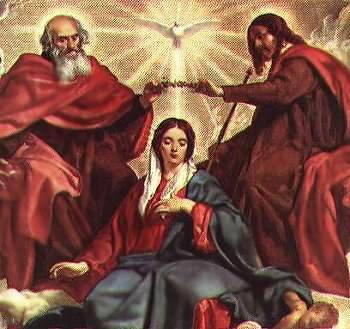
Queenship of the Blessed Virgin Mary
Veni Praecelsa Domina
Come, o Supreme Lady,
O Mary, do thou visit us,
enlighten our sickly souls
by the example of thy life.
Come, O Salvatrix of the world,
take away the filth of sin;
by visiting thy people,
remove their peril.
Come, O Queen of nations,
extinguish the flames of guilt,
rectify what is wrong,
give us to live innocently.
Come, and visit the sick,
O Mary, fortify the strong
with thy holy vigor,
so that the brave fail not.
Come, O thou Star, and Light of Seas,
shed thy ray of peace on us;
let the heart of John exult
with joy before the Lord.
Wednesday, 28 May 2014
The Recollection of Mary - Cardinal Bacci
The Recollection of Mary
1. It is believed that when the Angel Gabriel visited the Blessed Virgin in order to tell her that she was to be the Mother of God, she was in a quiet corner of her home, absorbed in prayer. She had no love for the noise and confusion of the world, but preferred to be recollected in the company of God. This was to be the pattern of her whole life. In the midst of her domestic duties, on her journey to St. Elizabeth, and on her travels in Galilee and Judea in the wake of her divine Son, her mind and heart were always concentrated on God.
Interior recollection is a wonderful thing. It helps us to hear God's voice more clearly. It keeps us removed from the temptations of the world and assists us in sanctifying every moment of our lives.
“The cell continually dwelt in groweth sweet,” (Bk. 1, C. 20:5) says “The Imitation of Christ,” and goes on to ask: “What canst thou see elsewhere that thou dost not see here? Behold the heavens, and the earth, and all the elements; for out of these are all things made.” (Ibid. C. 20: 8) “As often as I have been amongst men,” it exclaims, “I have returned less a man.” (Ibid. C. 20:2) When we move around chattering with different people, we have lost something of ourselves by the time we return home. Perhaps we have wasted a good deal of time in useless conversation or, worse still, have seen or heard unpleasant or disturbing things. When we go about in the world, we do not often see much that is edifying or instructive and rarely meet people whose conversation does us good. For this reason, even when we cannot remain apart, we should carry in ourselves as Mary did a spirit of interior recollection and communication with God.
2. We cannot all be monks or hermits, however. Most men have to live in the world and look after their daily business. They have to deal with all kinds of people and are subject to the tremendous influences of the modern world. How can they be recollected? It is difficult, but it is possible. Most of the Saints lived in the heart of the world while still maintaining close contact with God. St. Paul the Apostle and St. John Bosco are two examples which come to mind.
St. Paul traversed the greater part of the known world. He preached in the temple of Jerusalem and on the Areopagus of Athens, in the Synagogues, squares, courtrooms, and prisons of countless cities. Through it all his heart remained united with God so that he could exclaim: “It is now no longer I that live, but Christ lives in me.” (Gal. 2:20) “For to me to live is Christ,” he said, “and to die is gain. But if to live in the flesh is my lot this means for me fruitful labour, and I do not know which to choose. Indeed I am hard pressed from both sides—desiring to depart and to be with Christ, a lot by far the better; yet to stay on in the flesh is necessary for your sake.” (Phil. 1:21-23)
The superhuman industriousness of St. John Bosco is well known. He never rested, but his extraordinary activity derived entirely from his close and loving union with God. We also should try and preserve an oasis of silence in our hearts while we are making our way through the noisy uproar which prevails around us. We shall draw from this oasis of interior recollection the power to conquer the temptations of the world and to accomplish all the good work which God wishes us to do.
3. Holy Mary, you who are constantly close to God, obtain for me also this interior spirit of prayer. Then I shall be able to raise my thoughts to God in the midst of worldly confusion and I shall not surrender to the enchantment of worldly pleasures. Under your protection I shall always remain united to God, Who is my only true good. Amen.
1. It is believed that when the Angel Gabriel visited the Blessed Virgin in order to tell her that she was to be the Mother of God, she was in a quiet corner of her home, absorbed in prayer. She had no love for the noise and confusion of the world, but preferred to be recollected in the company of God. This was to be the pattern of her whole life. In the midst of her domestic duties, on her journey to St. Elizabeth, and on her travels in Galilee and Judea in the wake of her divine Son, her mind and heart were always concentrated on God.
Interior recollection is a wonderful thing. It helps us to hear God's voice more clearly. It keeps us removed from the temptations of the world and assists us in sanctifying every moment of our lives.
“The cell continually dwelt in groweth sweet,” (Bk. 1, C. 20:5) says “The Imitation of Christ,” and goes on to ask: “What canst thou see elsewhere that thou dost not see here? Behold the heavens, and the earth, and all the elements; for out of these are all things made.” (Ibid. C. 20: 8) “As often as I have been amongst men,” it exclaims, “I have returned less a man.” (Ibid. C. 20:2) When we move around chattering with different people, we have lost something of ourselves by the time we return home. Perhaps we have wasted a good deal of time in useless conversation or, worse still, have seen or heard unpleasant or disturbing things. When we go about in the world, we do not often see much that is edifying or instructive and rarely meet people whose conversation does us good. For this reason, even when we cannot remain apart, we should carry in ourselves as Mary did a spirit of interior recollection and communication with God.
2. We cannot all be monks or hermits, however. Most men have to live in the world and look after their daily business. They have to deal with all kinds of people and are subject to the tremendous influences of the modern world. How can they be recollected? It is difficult, but it is possible. Most of the Saints lived in the heart of the world while still maintaining close contact with God. St. Paul the Apostle and St. John Bosco are two examples which come to mind.
St. Paul traversed the greater part of the known world. He preached in the temple of Jerusalem and on the Areopagus of Athens, in the Synagogues, squares, courtrooms, and prisons of countless cities. Through it all his heart remained united with God so that he could exclaim: “It is now no longer I that live, but Christ lives in me.” (Gal. 2:20) “For to me to live is Christ,” he said, “and to die is gain. But if to live in the flesh is my lot this means for me fruitful labour, and I do not know which to choose. Indeed I am hard pressed from both sides—desiring to depart and to be with Christ, a lot by far the better; yet to stay on in the flesh is necessary for your sake.” (Phil. 1:21-23)
The superhuman industriousness of St. John Bosco is well known. He never rested, but his extraordinary activity derived entirely from his close and loving union with God. We also should try and preserve an oasis of silence in our hearts while we are making our way through the noisy uproar which prevails around us. We shall draw from this oasis of interior recollection the power to conquer the temptations of the world and to accomplish all the good work which God wishes us to do.
3. Holy Mary, you who are constantly close to God, obtain for me also this interior spirit of prayer. Then I shall be able to raise my thoughts to God in the midst of worldly confusion and I shall not surrender to the enchantment of worldly pleasures. Under your protection I shall always remain united to God, Who is my only true good. Amen.
Mary, Queen of Heaven and Earth - Cardinal Bacci
Mary, Queen of Heaven and Earth
1. Towards the close of his life, St. Paul wrote to his well-loved disciple, St. Timothy: “As for me, I am already being poured out in sacrifice, and the time of my deliverance is at hand. I have fought the good fight, I have finished the course, I have kept the faith. For the rest, there is laid up for me a crown of justice, which the Lord, the just judge, will give to me in that day; yet not to me only, but also to those who love his coming.” (2 Tim. 4:6-8)
After all his apostolic labours and difficulties, and after a lifetime of boundless love, St. Paul could confidently say that he would receive the crown which he had earned. When the Blessed Virgin came to the end of her earthly pilgrimage, during which she had lovingly worked and suffered so much for Jesus, she could have expected with even greater certainty to receive the crown of glory which she had merited. She was the noblest and holiest of creatures, because she was the Mother of the eternal Word of God made man. Therefore her reward had to be greater than that of any other creature. She was the Mother of the King of Angels and of Saints, of Heaven and of earth. As such, it was her place to rule over them all. Seated at the right hand of her divine Son, she has glory and power which none other could possess. The Church, therefore, invokes her under the title of Queen of Angels and of Saints, Queen of Apostles, Queen of Virgins, of Confessors and of Martyrs, Queen of Heaven and of earth. When our Holy Father, Pius XII, solemnly proclaimed her Queenship in the year 1954, he was only giving voice to the general consensus of tradition, of the Liturgy, and of the belief of all the faithful. (Cf. Encyclical “Ad Coeli Reginam,” 11th Oct., 1954)
It should be very encouraging to all of us to know that we have so powerful a Queen in Heaven, whose privilege it is to dispense God's graces. She has crushed the poisonous head of Satan. Now she is able and eager to help us, her loyal sons and servants, to resist temptation, to frustrate the schemes of our deadly enemy, and to perfect ourselves in virtue.
2. Mary is a supremely powerful Queen, because she is the Mother of God. She is a most merciful Queen, because she is our Mother and the Mother of sinners. She is a most loving Queen, because hers is a kingdom of love and of goodness. Even as she is the most lovable of creatures, so she is the most loving.
“To the immense love of God for his creatures,” writes Cardinal Massimi, “and to His command to rational beings that they should love Him with all their hearts, there has been only one worthy response. That response was yours, O Mary. You loved God with an intensity which surpassed the combined love of all other creatures. God created your heart, which was destined to be the heart of His Mother, after the fashion of His own. Adorned with every perfection, it had an immeasurable capacity for love... even as you are supreme in your love for God, O Mary, so you are supreme in your love for us... What a cause for gladness this is! God loves us, and you love us, O Mary. Our poor hearts which have a natural longing to be loved and suffer so much when they are disappointed, rejoice in being the object of your love. We thank you, O Mary, for favouring us in spite of your greatness and our unworthiness.” (Card. Massimi: Le Feste di Maria, p. 82-83)
The realisation of Mary's regal power and of her maternal love for us should lead us to have complete confidence in her. This confidence should inspire us to pray fervently to her, to love her in return, and to form a practical resolution of imitating her.
3. O Queen of Angels and of Saints, my most powerful and most loving Mother, have pity on me, for I am surrounded by such great perils and need so much to advance in virtue. Although I am weak and weary, I desire ardently to imitate the shining example of your holiness. Obtain for me from your divine Son the grace to imitate you as far as I am able on earth, so that one day I may share your happiness in the presence of God for all eternity. Amen.
1. Towards the close of his life, St. Paul wrote to his well-loved disciple, St. Timothy: “As for me, I am already being poured out in sacrifice, and the time of my deliverance is at hand. I have fought the good fight, I have finished the course, I have kept the faith. For the rest, there is laid up for me a crown of justice, which the Lord, the just judge, will give to me in that day; yet not to me only, but also to those who love his coming.” (2 Tim. 4:6-8)
After all his apostolic labours and difficulties, and after a lifetime of boundless love, St. Paul could confidently say that he would receive the crown which he had earned. When the Blessed Virgin came to the end of her earthly pilgrimage, during which she had lovingly worked and suffered so much for Jesus, she could have expected with even greater certainty to receive the crown of glory which she had merited. She was the noblest and holiest of creatures, because she was the Mother of the eternal Word of God made man. Therefore her reward had to be greater than that of any other creature. She was the Mother of the King of Angels and of Saints, of Heaven and of earth. As such, it was her place to rule over them all. Seated at the right hand of her divine Son, she has glory and power which none other could possess. The Church, therefore, invokes her under the title of Queen of Angels and of Saints, Queen of Apostles, Queen of Virgins, of Confessors and of Martyrs, Queen of Heaven and of earth. When our Holy Father, Pius XII, solemnly proclaimed her Queenship in the year 1954, he was only giving voice to the general consensus of tradition, of the Liturgy, and of the belief of all the faithful. (Cf. Encyclical “Ad Coeli Reginam,” 11th Oct., 1954)
It should be very encouraging to all of us to know that we have so powerful a Queen in Heaven, whose privilege it is to dispense God's graces. She has crushed the poisonous head of Satan. Now she is able and eager to help us, her loyal sons and servants, to resist temptation, to frustrate the schemes of our deadly enemy, and to perfect ourselves in virtue.
2. Mary is a supremely powerful Queen, because she is the Mother of God. She is a most merciful Queen, because she is our Mother and the Mother of sinners. She is a most loving Queen, because hers is a kingdom of love and of goodness. Even as she is the most lovable of creatures, so she is the most loving.
“To the immense love of God for his creatures,” writes Cardinal Massimi, “and to His command to rational beings that they should love Him with all their hearts, there has been only one worthy response. That response was yours, O Mary. You loved God with an intensity which surpassed the combined love of all other creatures. God created your heart, which was destined to be the heart of His Mother, after the fashion of His own. Adorned with every perfection, it had an immeasurable capacity for love... even as you are supreme in your love for God, O Mary, so you are supreme in your love for us... What a cause for gladness this is! God loves us, and you love us, O Mary. Our poor hearts which have a natural longing to be loved and suffer so much when they are disappointed, rejoice in being the object of your love. We thank you, O Mary, for favouring us in spite of your greatness and our unworthiness.” (Card. Massimi: Le Feste di Maria, p. 82-83)
The realisation of Mary's regal power and of her maternal love for us should lead us to have complete confidence in her. This confidence should inspire us to pray fervently to her, to love her in return, and to form a practical resolution of imitating her.
3. O Queen of Angels and of Saints, my most powerful and most loving Mother, have pity on me, for I am surrounded by such great perils and need so much to advance in virtue. Although I am weak and weary, I desire ardently to imitate the shining example of your holiness. Obtain for me from your divine Son the grace to imitate you as far as I am able on earth, so that one day I may share your happiness in the presence of God for all eternity. Amen.
Prayer to Mary, Our Mother - Cardinal Bacci
Prayer to Mary, Our Mother
1. There is a story told of a devout man who was wavering before the onslaught of temptation and was accustomed to kneel before a statue of Our Lady and say this simple prayer: "Show yourself a mother to me." When the same man had fallen into sin and, although full of remorse, had not succeeded in reforming, he went one day to Mary's altar and pitifully repeated his usual prayer. Immediately he heard a gentle voice replying: "Show that you are my son."
If we wish Our Lady to be a mother to us, we must also show her that we are her children. Earthly mothers are delighted to think that their offspring take after them. In the same way Mary wishes to see a reflection of her own sanctity in our thoughts, desires and actions. All this demands sacrifice, of course. It demands hard work, fervent prayer, and constant watchfulness over ourselves. If we do all that we can and never lose courage, God will not refuse us His help and our good Mother will not fail to intercede for us.
2. Even if we fall often into sin, we should never be discouraged. Although Mary is the Mother of all mankind, she is in a special fashion the merciful Mother of sinners. No matter how sinful a man may be, he will not be lost if he is sincerely devoted to Mary. We must not be deluded into imagining, however, that it is enough to pray to Our Lady in order to be saved, even if we continue to commit sin. St. Brigid tells us in her revelations that Mary is not the Mother of hardened sinners, but only of those sinners who desire to amend their lives and pray to her with this intention. (Rev., Bk. 4, C. 138) Jesus has told us, moreover, that “not everyone who says to me, Lord, Lord, shall enter the kingdom of heaven; but he who does the will of my Father in heaven shall enter the kingdom of heaven.” (Mt. 7:21) The same holds for those who are devoted to Our Lady. It is not sufficient to pray to her, but we must also imitate her and accompany our prayers with the resolution of improving.
Fervent prayer is certain to obtain Mary's intercession on our behalf. St. Alphonsus recommends in particular (a) the Hail Mary repeated three times every morning and every night with the invocation 'Mother most pure, pray for me'; (b) an invocation to Our Lady every time the clock strikes the hour; (c) the daily recitation of the Holy Rosary; (d) a visit to the altar of Our Lady every time we make our daily visit to the Blessed Sacrament; (e) and some acts of mortification on the vigils of principal feasts of Our Lady, followed by a fervent celebration of the feasts themselves. If we show our good dispositions in this manner, Mary will be our true Mother in life and in death.
3. O Mary, be my merciful and kind Mother always, but especially when you see me struggling against temptation and against the wiles of the devil. Grant that I may never fall and offend God again. I need you so much. Help me and save me. Amen.
1. There is a story told of a devout man who was wavering before the onslaught of temptation and was accustomed to kneel before a statue of Our Lady and say this simple prayer: "Show yourself a mother to me." When the same man had fallen into sin and, although full of remorse, had not succeeded in reforming, he went one day to Mary's altar and pitifully repeated his usual prayer. Immediately he heard a gentle voice replying: "Show that you are my son."
If we wish Our Lady to be a mother to us, we must also show her that we are her children. Earthly mothers are delighted to think that their offspring take after them. In the same way Mary wishes to see a reflection of her own sanctity in our thoughts, desires and actions. All this demands sacrifice, of course. It demands hard work, fervent prayer, and constant watchfulness over ourselves. If we do all that we can and never lose courage, God will not refuse us His help and our good Mother will not fail to intercede for us.
2. Even if we fall often into sin, we should never be discouraged. Although Mary is the Mother of all mankind, she is in a special fashion the merciful Mother of sinners. No matter how sinful a man may be, he will not be lost if he is sincerely devoted to Mary. We must not be deluded into imagining, however, that it is enough to pray to Our Lady in order to be saved, even if we continue to commit sin. St. Brigid tells us in her revelations that Mary is not the Mother of hardened sinners, but only of those sinners who desire to amend their lives and pray to her with this intention. (Rev., Bk. 4, C. 138) Jesus has told us, moreover, that “not everyone who says to me, Lord, Lord, shall enter the kingdom of heaven; but he who does the will of my Father in heaven shall enter the kingdom of heaven.” (Mt. 7:21) The same holds for those who are devoted to Our Lady. It is not sufficient to pray to her, but we must also imitate her and accompany our prayers with the resolution of improving.
Fervent prayer is certain to obtain Mary's intercession on our behalf. St. Alphonsus recommends in particular (a) the Hail Mary repeated three times every morning and every night with the invocation 'Mother most pure, pray for me'; (b) an invocation to Our Lady every time the clock strikes the hour; (c) the daily recitation of the Holy Rosary; (d) a visit to the altar of Our Lady every time we make our daily visit to the Blessed Sacrament; (e) and some acts of mortification on the vigils of principal feasts of Our Lady, followed by a fervent celebration of the feasts themselves. If we show our good dispositions in this manner, Mary will be our true Mother in life and in death.
3. O Mary, be my merciful and kind Mother always, but especially when you see me struggling against temptation and against the wiles of the devil. Grant that I may never fall and offend God again. I need you so much. Help me and save me. Amen.
Sunday, 25 May 2014
Holy Purity - Cardinal Bacci
Holy Purity
1. Have you ever experienced the sheer delight of climbing the mountains on a summer's day and coming across one of those little alpine lakes, a tiny mirror reflecting the still blueness of the sky? Or have you ever watched an infant smiling in its angelic slumber and been held spellbound by this vision of innocence? Finally, on some calm, clear night, surely you have studied the star-spangled sky and have been so overwhelmed by the beauty of the scene that you could have cried out with the Psalmist: “The heavens declare the glory of God, and the firmament proclaims His handiwork.” (Ps. 18:1) These are only faint images of the beauty and virginal purity of Mary. Her soul was the purest and most beautiful of the entire human and angelic creation, because nobody else was ever raised to the dignity of the Motherhood of God. She was conceived free from all taint of original sin and enriched with every grace. In her chaste womb she conceived the Infant Jesus. Later she held Him close to her heart; she lived for Him and eventually died for love of Him.
Purity is a virtue which is attractive to everybody, even to those who are evil themselves or to those who have lost their own chastity. We love and desire this virtue, but are we prepared to make any sacrifice in order to preserve it in the manner demanded by our particular state in life? “The kingdom of heaven has been enduring violent assault,” Jesus said, “and the violent have been seizing it by force.” (Mt. 11:12) This is especially true in regard to the acquisition of the virtue of purity. It is not enough to desire it; we must be willing to make sacrifices in order to acquire it.
2. Since Mary excelled so much in this virtue and had so great a love for it, she will obtain for us from God the grace necessary for us to preserve it, as long as we pray humbly to her, especially in time of temptation. Let us remember that at Baptism we became members of the Mystical Body of Christ and temples of the Holy Spirit. (Cf. 1 Cor. 6:15-20) We are obliged to avoid defiling this temple and making the Mystical Body of Christ a dwelling-place for the devil. It is not true to say that this is an impossible fight. We know from our own experience that we can win. We have often battled with or fled from occasions of sin. We have prayed and made sacrifices in order to win, and with the help of God and the protection of the Blessed Virgin we have won. After our victory we have felt elated and have experienced that peace which only God's grace can bestow. If we have succeeded so many times, why cannot we do the same always? There is no need to be afraid. If we do all that we can, God's grace will do the rest. “I can do all things in him who strengthens me,” (Phil. 4:13) says St. Paul. “God is faithful,” he writes elsewhere, “and will not permit you to be tempted beyond your strength, but with the temptation will also give you a way out that you may be able to bear it.” (1 Cor. 10:13) If we remain pure, we shall see God. We shall see Him in the work of His creation in this world and we shall see and enjoy Him forever in Heaven. “Blessed are the clean of heart, for they shall see God.”(Mt. 5:8)
3. Most pure Virgin, immaculate Mother of God, you see how many dangers and snares surround my soul. You see how weak I am and how much I need your help. Assist me, I beseech you, when I am tempted. Grant that I may die in the state of grace rather than fall into sin. Amen.
1. Have you ever experienced the sheer delight of climbing the mountains on a summer's day and coming across one of those little alpine lakes, a tiny mirror reflecting the still blueness of the sky? Or have you ever watched an infant smiling in its angelic slumber and been held spellbound by this vision of innocence? Finally, on some calm, clear night, surely you have studied the star-spangled sky and have been so overwhelmed by the beauty of the scene that you could have cried out with the Psalmist: “The heavens declare the glory of God, and the firmament proclaims His handiwork.” (Ps. 18:1) These are only faint images of the beauty and virginal purity of Mary. Her soul was the purest and most beautiful of the entire human and angelic creation, because nobody else was ever raised to the dignity of the Motherhood of God. She was conceived free from all taint of original sin and enriched with every grace. In her chaste womb she conceived the Infant Jesus. Later she held Him close to her heart; she lived for Him and eventually died for love of Him.
Purity is a virtue which is attractive to everybody, even to those who are evil themselves or to those who have lost their own chastity. We love and desire this virtue, but are we prepared to make any sacrifice in order to preserve it in the manner demanded by our particular state in life? “The kingdom of heaven has been enduring violent assault,” Jesus said, “and the violent have been seizing it by force.” (Mt. 11:12) This is especially true in regard to the acquisition of the virtue of purity. It is not enough to desire it; we must be willing to make sacrifices in order to acquire it.
2. Since Mary excelled so much in this virtue and had so great a love for it, she will obtain for us from God the grace necessary for us to preserve it, as long as we pray humbly to her, especially in time of temptation. Let us remember that at Baptism we became members of the Mystical Body of Christ and temples of the Holy Spirit. (Cf. 1 Cor. 6:15-20) We are obliged to avoid defiling this temple and making the Mystical Body of Christ a dwelling-place for the devil. It is not true to say that this is an impossible fight. We know from our own experience that we can win. We have often battled with or fled from occasions of sin. We have prayed and made sacrifices in order to win, and with the help of God and the protection of the Blessed Virgin we have won. After our victory we have felt elated and have experienced that peace which only God's grace can bestow. If we have succeeded so many times, why cannot we do the same always? There is no need to be afraid. If we do all that we can, God's grace will do the rest. “I can do all things in him who strengthens me,” (Phil. 4:13) says St. Paul. “God is faithful,” he writes elsewhere, “and will not permit you to be tempted beyond your strength, but with the temptation will also give you a way out that you may be able to bear it.” (1 Cor. 10:13) If we remain pure, we shall see God. We shall see Him in the work of His creation in this world and we shall see and enjoy Him forever in Heaven. “Blessed are the clean of heart, for they shall see God.”(Mt. 5:8)
3. Most pure Virgin, immaculate Mother of God, you see how many dangers and snares surround my soul. You see how weak I am and how much I need your help. Assist me, I beseech you, when I am tempted. Grant that I may die in the state of grace rather than fall into sin. Amen.
Saturday, 24 May 2014
Mary, the Source of Holiness - Cardinal Bacci
Mary, the Source of Holiness
1.God is the primary origin of all holiness. But the Blessed Virgin gave us Jesus, Who is our Redeemer, and the author of grace. For this reason she may be called the source of grace, the divine aqueduct, as St. Bernard puts it, through which the supernatural life of grace is brought to us. (In adv. Domini, Serm. 2, n.5) She was, moreover, full of grace and outstanding in holiness; as the Mother of God she can obtain anything for us from her divine Son, because “it is the will of God that we receive everything through the hands of Mary.” (St. Bernard, In Nativ. B.M.V., Serm., n. 7) Thirdly, even by her example she can be the source of sanctity for us. If we study her amazing humility, we shall learn to be humble, for our sinfulness gives us such good reason to humble ourselves. If we meditate on her spotless purity we shall experience a great desire and love for this beautiful virtue and shall have recourse to her in every danger to save us from impurity. Then let us reflect on her ardent love for God and for men. Her charity prompted her maternal heart to offer up as a divine Victim her Son nailed to the Cross. If we reflect on the nature of her charity, we also shall feel urged to love God above all things and to pray, work, and make sacrifices for the salvation of our fellowmen. Let us have always before our minds the image of our heavenly Mother and we shall be inspired to seek perfection in all our actions.
2. Since we are Mary's sons, we should try and reproduce her holiness in ourselves. Although it is higher than that of the angels, her sanctity is easy to imitate. There is no record that she ever had ecstasies or worked miracles. Hers was a perfect internal sanctity, consisting of total conformity with the will of God and an intense love for Him. We must aspire to this kind of holiness and model our lives upon it. There is no point in arguing that it is sufficient to be good Christians and that it is not necessary to be holy. A Christian, to be truly such, must be holy.
St. Paul referred to the early faithful as saints. (Eph. 1:1) “You are a chosen race,” said St. Peter, “a royal priesthood, a holy nation, a purchased people,” (1 Peter 2:9) and he recalled to them the admonition of the Holy Spirit: “You shall be holy, because I am holy.” (1 Peter 1:16; Lev. 11:44) “You are to be perfect,” Jesus Himself had commanded, “even as your heavenly Father is perfect.” (Mt. 5:48) This was the reason, He indicated, why He had come into the world – “that they may have life, and have it more abundantly.” (John 10:10) This is the purpose of the Gospel, and this must be the purpose of our lives. Some day we shall either be holy, or we shall be damned. We shall either be saints in Heaven or condemned forever in Hell. This truth merits careful thought; everything else is passing, but this is something which will never pass away. This command to sanctify ourselves is a reality which is present at every moment of our lives. Let us do our best to obey it at any cost.
3. Mary, my Mother, you are all-holy. You gave Jesus to us and received from Him the role of Mediatrix of His graces. Ask of your divine Son that we may always be able to avoid the slightest trace of sin and to devote all our thoughts, affections and actions to becoming holy. Amen.
1.God is the primary origin of all holiness. But the Blessed Virgin gave us Jesus, Who is our Redeemer, and the author of grace. For this reason she may be called the source of grace, the divine aqueduct, as St. Bernard puts it, through which the supernatural life of grace is brought to us. (In adv. Domini, Serm. 2, n.5) She was, moreover, full of grace and outstanding in holiness; as the Mother of God she can obtain anything for us from her divine Son, because “it is the will of God that we receive everything through the hands of Mary.” (St. Bernard, In Nativ. B.M.V., Serm., n. 7) Thirdly, even by her example she can be the source of sanctity for us. If we study her amazing humility, we shall learn to be humble, for our sinfulness gives us such good reason to humble ourselves. If we meditate on her spotless purity we shall experience a great desire and love for this beautiful virtue and shall have recourse to her in every danger to save us from impurity. Then let us reflect on her ardent love for God and for men. Her charity prompted her maternal heart to offer up as a divine Victim her Son nailed to the Cross. If we reflect on the nature of her charity, we also shall feel urged to love God above all things and to pray, work, and make sacrifices for the salvation of our fellowmen. Let us have always before our minds the image of our heavenly Mother and we shall be inspired to seek perfection in all our actions.
2. Since we are Mary's sons, we should try and reproduce her holiness in ourselves. Although it is higher than that of the angels, her sanctity is easy to imitate. There is no record that she ever had ecstasies or worked miracles. Hers was a perfect internal sanctity, consisting of total conformity with the will of God and an intense love for Him. We must aspire to this kind of holiness and model our lives upon it. There is no point in arguing that it is sufficient to be good Christians and that it is not necessary to be holy. A Christian, to be truly such, must be holy.
St. Paul referred to the early faithful as saints. (Eph. 1:1) “You are a chosen race,” said St. Peter, “a royal priesthood, a holy nation, a purchased people,” (1 Peter 2:9) and he recalled to them the admonition of the Holy Spirit: “You shall be holy, because I am holy.” (1 Peter 1:16; Lev. 11:44) “You are to be perfect,” Jesus Himself had commanded, “even as your heavenly Father is perfect.” (Mt. 5:48) This was the reason, He indicated, why He had come into the world – “that they may have life, and have it more abundantly.” (John 10:10) This is the purpose of the Gospel, and this must be the purpose of our lives. Some day we shall either be holy, or we shall be damned. We shall either be saints in Heaven or condemned forever in Hell. This truth merits careful thought; everything else is passing, but this is something which will never pass away. This command to sanctify ourselves is a reality which is present at every moment of our lives. Let us do our best to obey it at any cost.
3. Mary, my Mother, you are all-holy. You gave Jesus to us and received from Him the role of Mediatrix of His graces. Ask of your divine Son that we may always be able to avoid the slightest trace of sin and to devote all our thoughts, affections and actions to becoming holy. Amen.
Mary, a Light in the Darkness - Cardinal Bacci
Mary, a Light in the Darkness
1. Let us imagine for a moment that we have grown blind and are forever plunged in darkness. It is an unhappy thought. Never again to see those who are dear to us, never to see the light of the sun nor any of the splendour of the universe. We should feel as if were alone, for we should have to depend only on sounds and on the voices of others for communication with the external world. As St. Augustine points out, however, in his commentary on the miracle of the man who had been blind from birth, we are all more or less blind in the supernatural order. The world is the image of God, but do we see His presence in everything which surrounds us? Is it not more often the case that created things distract us and lead us to forget their Creator, because we regard them as a means of satisfying our own comfort and our own ego? We should look on creatures as go-betweens which help us to ascend to God, the beginning and end of all creation.
Unfortunately, instead of climbing this mystical ladder which leads us to God, we often descend it. We forget God and become excessively wrapped up in worldly affairs. Sometimes matters may be even worse; not only do we forget God through our love of creatures, but we use them to offend Him. God has given us eyes to admire His works and, as a result, to lead us to praise, thank, and love Him. Instead, we often use this wonderful gift in order to commit sin. He has given us the gift of speech, the gift of hearing, and other senses. But how do we employ them? The tongue is a marvellous invention, but, as St. James writes, “if anyone does not offend in the word, he is a perfect man, able also to lead round by a bridle the whole body... With it we bless God the Father; and with it we curse men, who have been made after the likeness of God. Out of the same mouth proceed blessing and cursing. These things, my brethren, ought not to be so.” (James 3:2-10) What can be said of vision and of speech can be said of all the senses and faculties of body and soul. They are all God's gifts and should therefore be used as means of bringing ourselves closer to Him. If creatures lead us away from God and cause us to forget Him, or if, worse still, they cause us to offend Him, then we are spiritually blind and far more unfortunate than those who have lost their natural vision.
2. When Allesandro Manzoni was a young man, he became a prey to error and to passion. One day he was walking thoughtfully through the streets of Paris when he found himself standing before a church. He shook his head when he saw it, then hesitated, and at length resolutely entered. He knelt in front of the altar and, with a sense of confusion, looked up at the statue of the Madonna. He buried his face in his hands and prayed. It was the first time he had prayed for years. After a little while he left the church a changed man, and changed forever! In spite of his extraordinary talents, even he had been a poor blind man. The grace of God, obtained for him through the intercession of the Blessed Virgin, restored to him “the true light that enlightens every man who comes into the world.” (John 1:9)
Most of us are spiritually blind to a greater or less degree. If we are, let us go to Mary. Our good Mother will obtain for us the light and grace of God, for she has always been a burning torch, illuminating the port of salvation for countless souls lost in the darkness of error and of vice. There have been so many whose minds were tormented by doubt and darkened by sin, and as soon as they knelt and prayed before her altar, they received from her the enlightenment, consolation, and strength of faith and virtue which they needed in order to begin a new Christian life. Let us do the same and this month of Mary will be a new and sincere beginning for us.
3. Most holy Mary, during your earthly pilgrimage you never once lost sight of God. Grant that I may not be lost in the darkness of this world. Grant that I may not be ensnared by the passing charm and false beauty of these created things which surround me. Grant that I may see in all things the presence and beauty of God, so that I may always continue to advance nearer and nearer to Him. Amen.
1. Let us imagine for a moment that we have grown blind and are forever plunged in darkness. It is an unhappy thought. Never again to see those who are dear to us, never to see the light of the sun nor any of the splendour of the universe. We should feel as if were alone, for we should have to depend only on sounds and on the voices of others for communication with the external world. As St. Augustine points out, however, in his commentary on the miracle of the man who had been blind from birth, we are all more or less blind in the supernatural order. The world is the image of God, but do we see His presence in everything which surrounds us? Is it not more often the case that created things distract us and lead us to forget their Creator, because we regard them as a means of satisfying our own comfort and our own ego? We should look on creatures as go-betweens which help us to ascend to God, the beginning and end of all creation.
Unfortunately, instead of climbing this mystical ladder which leads us to God, we often descend it. We forget God and become excessively wrapped up in worldly affairs. Sometimes matters may be even worse; not only do we forget God through our love of creatures, but we use them to offend Him. God has given us eyes to admire His works and, as a result, to lead us to praise, thank, and love Him. Instead, we often use this wonderful gift in order to commit sin. He has given us the gift of speech, the gift of hearing, and other senses. But how do we employ them? The tongue is a marvellous invention, but, as St. James writes, “if anyone does not offend in the word, he is a perfect man, able also to lead round by a bridle the whole body... With it we bless God the Father; and with it we curse men, who have been made after the likeness of God. Out of the same mouth proceed blessing and cursing. These things, my brethren, ought not to be so.” (James 3:2-10) What can be said of vision and of speech can be said of all the senses and faculties of body and soul. They are all God's gifts and should therefore be used as means of bringing ourselves closer to Him. If creatures lead us away from God and cause us to forget Him, or if, worse still, they cause us to offend Him, then we are spiritually blind and far more unfortunate than those who have lost their natural vision.
2. When Allesandro Manzoni was a young man, he became a prey to error and to passion. One day he was walking thoughtfully through the streets of Paris when he found himself standing before a church. He shook his head when he saw it, then hesitated, and at length resolutely entered. He knelt in front of the altar and, with a sense of confusion, looked up at the statue of the Madonna. He buried his face in his hands and prayed. It was the first time he had prayed for years. After a little while he left the church a changed man, and changed forever! In spite of his extraordinary talents, even he had been a poor blind man. The grace of God, obtained for him through the intercession of the Blessed Virgin, restored to him “the true light that enlightens every man who comes into the world.” (John 1:9)
Most of us are spiritually blind to a greater or less degree. If we are, let us go to Mary. Our good Mother will obtain for us the light and grace of God, for she has always been a burning torch, illuminating the port of salvation for countless souls lost in the darkness of error and of vice. There have been so many whose minds were tormented by doubt and darkened by sin, and as soon as they knelt and prayed before her altar, they received from her the enlightenment, consolation, and strength of faith and virtue which they needed in order to begin a new Christian life. Let us do the same and this month of Mary will be a new and sincere beginning for us.
3. Most holy Mary, during your earthly pilgrimage you never once lost sight of God. Grant that I may not be lost in the darkness of this world. Grant that I may not be ensnared by the passing charm and false beauty of these created things which surround me. Grant that I may see in all things the presence and beauty of God, so that I may always continue to advance nearer and nearer to Him. Amen.
Mary, the Source of Peace - Cardinal Bacci
Mary, the Source of Peace
1. Mary is surrounded by an atmosphere of peace. The countenance of the Virgin-Mother reflects the serenity of her soul. She was conceived free from original sin and endowed with every grace and with every supernatural gift. There was no struggle in her between good and evil, for this conflict is the effect of concupiscence. She never experienced the rule of sin of which St. Paul complains. “I see another law in my members,” says St. Paul, “warring against the law of my mind and making me prisoner to the law of sin that is in my members. Unhappy man that I am! Who will deliver me from the body of this death? The grace of God through Jesus Christ our Lord.” (Rom. 7:23-25) It was quite otherwise with Mary. Her lower inclinations were completely subject to her spiritual faculties, which were in their turn perfectly submissive to the commands and inspirations of God. Nevertheless, while she enjoyed complete interior harmony, Mary had to endure external conflict and suffering. Holy Simeon foretold that the sword of sorrow would pierce her heart. In fact, her life was altogether interwoven with hardship, want and suffering until, eventually, she knelt at the foot of the Cross on which Jesus was dying for the love of mankind and offered the divine Victim for our salvation. At the last moment, however, torn with sorrow though she was, she did not depart in the slightest from her spirit of perfect acceptance of God's will. Consequently, her peace of soul was never diminished or extinguished. Let us learn from her to accept everything from God's hands, both the tiny pleasures which brighten our lives from time to time and the humiliations, sufferings and death which it pleases God to keep in store for us.
2. If we wish to possess this true peace which only God can give, we must control and regulate the movements of our passions when they rebel against the soul. In other words, as St. Augustine says, our lower appetites must obey our reason, and this in its turn must be subject to its author, God. (De Serm. Domini, 1, 2) Real peace can only come to us as the result of the hard and constant labour of subordinating our passions to right reason and our reason to God. "And this is the peace," Augustine writes, "which God gives on earth to men of good will; this is the most perfect wisdom." (Ibid.) We have found from sad experience that sin and the free play of the passions cannot give us real peace, because “there is no peace to the wicked.” (Is. 48:22) When by the grace of God and the assistance of Our Lady we have subdued our rebellious inclinations, it is necessary for us to go further and abandon ourselves completely into the hands of God, asking Him for a spirit of absolute conformity to His will on all occasions. This is the price which we must pay to enjoy that peace which the world cannot give and which God gives only to those who do His holy will in all things. (Cf. John 14:27) It may seem that the way to acquire this peace is very difficult, but there is no other way. Let us pray to Our Lady. She has won peace and victory for the Church on many occasions; for example, against the Turks at Lepanto in 1571, and at Vienna in 1683. In the same way she will obtain for us, her children, interior peace of soul, the greatest treasure which we can possess on earth.
3. Mary, my most sweet Mother, in your immaculate soul there reigned that true peace which is nourished by God's grace and by complete obedience to His will. Obtain for me from your Son, Jesus, victory over my evil inclinations and resignation to the sufferings of life and to death itself. Then, following your holy example, may I also be able to acquire that interior peace which will one day be perfect and everlasting in Heaven. Amen.
1. Mary is surrounded by an atmosphere of peace. The countenance of the Virgin-Mother reflects the serenity of her soul. She was conceived free from original sin and endowed with every grace and with every supernatural gift. There was no struggle in her between good and evil, for this conflict is the effect of concupiscence. She never experienced the rule of sin of which St. Paul complains. “I see another law in my members,” says St. Paul, “warring against the law of my mind and making me prisoner to the law of sin that is in my members. Unhappy man that I am! Who will deliver me from the body of this death? The grace of God through Jesus Christ our Lord.” (Rom. 7:23-25) It was quite otherwise with Mary. Her lower inclinations were completely subject to her spiritual faculties, which were in their turn perfectly submissive to the commands and inspirations of God. Nevertheless, while she enjoyed complete interior harmony, Mary had to endure external conflict and suffering. Holy Simeon foretold that the sword of sorrow would pierce her heart. In fact, her life was altogether interwoven with hardship, want and suffering until, eventually, she knelt at the foot of the Cross on which Jesus was dying for the love of mankind and offered the divine Victim for our salvation. At the last moment, however, torn with sorrow though she was, she did not depart in the slightest from her spirit of perfect acceptance of God's will. Consequently, her peace of soul was never diminished or extinguished. Let us learn from her to accept everything from God's hands, both the tiny pleasures which brighten our lives from time to time and the humiliations, sufferings and death which it pleases God to keep in store for us.
2. If we wish to possess this true peace which only God can give, we must control and regulate the movements of our passions when they rebel against the soul. In other words, as St. Augustine says, our lower appetites must obey our reason, and this in its turn must be subject to its author, God. (De Serm. Domini, 1, 2) Real peace can only come to us as the result of the hard and constant labour of subordinating our passions to right reason and our reason to God. "And this is the peace," Augustine writes, "which God gives on earth to men of good will; this is the most perfect wisdom." (Ibid.) We have found from sad experience that sin and the free play of the passions cannot give us real peace, because “there is no peace to the wicked.” (Is. 48:22) When by the grace of God and the assistance of Our Lady we have subdued our rebellious inclinations, it is necessary for us to go further and abandon ourselves completely into the hands of God, asking Him for a spirit of absolute conformity to His will on all occasions. This is the price which we must pay to enjoy that peace which the world cannot give and which God gives only to those who do His holy will in all things. (Cf. John 14:27) It may seem that the way to acquire this peace is very difficult, but there is no other way. Let us pray to Our Lady. She has won peace and victory for the Church on many occasions; for example, against the Turks at Lepanto in 1571, and at Vienna in 1683. In the same way she will obtain for us, her children, interior peace of soul, the greatest treasure which we can possess on earth.
3. Mary, my most sweet Mother, in your immaculate soul there reigned that true peace which is nourished by God's grace and by complete obedience to His will. Obtain for me from your Son, Jesus, victory over my evil inclinations and resignation to the sufferings of life and to death itself. Then, following your holy example, may I also be able to acquire that interior peace which will one day be perfect and everlasting in Heaven. Amen.
Wednesday, 21 May 2014
Contemplation and Our Lady - Cardinal Bacci
Contemplation and Our Lady
1. True contemplation has its origin in love, for when love is intense it gives a clear insight into that which is loved. It is never the result of mere learning, which can be cold and uninspiring and therefore unable to give us a vision of the truth. Many are learned without love, while there are others who have no learning but love God and contemplate Him with a spiritual joy which is a prelude to the happiness of Heaven. Contemplation is not, therefore, a gift of learning. Even an illiterate man can have it, while those who study a great deal may be without it. For the most part, it is the gift of divine grace. This is not to deny that the knowledge of sacred things, especially of theology, can promote contemplation. It can help, as long as it is not the kind of learning which makes a man proud but rather leads him nearer to God. This is what St. Paul meant when he said that “knowledge puffs up, but charity edifies.” (1 Cor. 8:1)
Contemplation, then, begins in the love which is based on humility and on prayer. The contemplative must always look for the help of divine grace without ever presuming on his own powers and without fooling himself that he has made any progress of his own accord. It does not matter whether he is an ignorant or a learned man as long as he sees the reflection of God in all things and comes to know and love Him. Then, under the influence of divine grace, contemplation flows from the loving knowledge of God. The Blessed Virgin was created and conceived full of grace and endowed with more supernatural privileges than any other creature. Therefore she knew and loved God in a higher way than any of the Cherubim or Seraphim. It is only to be expected, then, that she would have had the gift of contemplation. Her prayer was an intimate conversation with God. We have an example of this kind of contemplative prayer in the hymn which she composed when she became the Mother of the Word Incarnate. “My soul magnifies the Lord, and my spirit rejoices in God my Saviour; Because he has regarded the lowliness of his handmaid; for, behold, henceforth all generations shall call me blessed...” (Luke 1:46-48) In Mary, however, the contemplative life was united to the active life. This was so whether she was in the house in Nazareth, or following Jesus on His apostolic journeys, or co-operating with the Apostles in their great mission during her last years on earth.
2. We must try and unite the active with the contemplative life as far as circumstances will allow. St. Thomas says that the perfection of the spiritual life consists precisely in this union of activity and contemplation. One without the other falls short of perfection. “It is greater to enlighten than simply to shine,” writes St. Thomas, “and greater to pass on the fruits of contemplation to others than merely to contemplate.” (St. Th., II-II, q.6, a.3)
Contemplation on its own can degenerate into useless day dreaming. It is necessary that it should produce a genuine interior transformation as a result of which the subject, under the guidance of the Holy Spirit, becomes in his speech and in his conduct a man of God. Now, the man of God is not satisfied with enjoying spiritual consolations, but is moved by his zeal for the glory of God to try and extend His kingdom by every possible means. It is in this way that contemplation becomes apostolic action.
We must remember, on the other hand, that neither is action on its own sufficient. It can become barren when it is not nourished by the interior life of grace which is the source of prayer and contemplation. It cannot be held that this last is the exclusive gift of a few privileged souls. Anyone can have it as long as he allows himself to be penetrated by the love of God and as long as he succeeds in securing moments of silence and recollection at intervals during life. In these moments he will grow closer to God and will enjoy a foretaste of the happiness of Heaven.
3. O Mary, my most holy Mother, obtain for me a great love for God, which will lead me closer to Him in all my actions. Even if I have not got the extraordinary gift of contemplation, grant that this love may live so powerfully in me that it will pervade all my actions. Then I shall be able to live in constant union with God and act in perfect accordance with His holy will. Amen.
1. True contemplation has its origin in love, for when love is intense it gives a clear insight into that which is loved. It is never the result of mere learning, which can be cold and uninspiring and therefore unable to give us a vision of the truth. Many are learned without love, while there are others who have no learning but love God and contemplate Him with a spiritual joy which is a prelude to the happiness of Heaven. Contemplation is not, therefore, a gift of learning. Even an illiterate man can have it, while those who study a great deal may be without it. For the most part, it is the gift of divine grace. This is not to deny that the knowledge of sacred things, especially of theology, can promote contemplation. It can help, as long as it is not the kind of learning which makes a man proud but rather leads him nearer to God. This is what St. Paul meant when he said that “knowledge puffs up, but charity edifies.” (1 Cor. 8:1)
Contemplation, then, begins in the love which is based on humility and on prayer. The contemplative must always look for the help of divine grace without ever presuming on his own powers and without fooling himself that he has made any progress of his own accord. It does not matter whether he is an ignorant or a learned man as long as he sees the reflection of God in all things and comes to know and love Him. Then, under the influence of divine grace, contemplation flows from the loving knowledge of God. The Blessed Virgin was created and conceived full of grace and endowed with more supernatural privileges than any other creature. Therefore she knew and loved God in a higher way than any of the Cherubim or Seraphim. It is only to be expected, then, that she would have had the gift of contemplation. Her prayer was an intimate conversation with God. We have an example of this kind of contemplative prayer in the hymn which she composed when she became the Mother of the Word Incarnate. “My soul magnifies the Lord, and my spirit rejoices in God my Saviour; Because he has regarded the lowliness of his handmaid; for, behold, henceforth all generations shall call me blessed...” (Luke 1:46-48) In Mary, however, the contemplative life was united to the active life. This was so whether she was in the house in Nazareth, or following Jesus on His apostolic journeys, or co-operating with the Apostles in their great mission during her last years on earth.
2. We must try and unite the active with the contemplative life as far as circumstances will allow. St. Thomas says that the perfection of the spiritual life consists precisely in this union of activity and contemplation. One without the other falls short of perfection. “It is greater to enlighten than simply to shine,” writes St. Thomas, “and greater to pass on the fruits of contemplation to others than merely to contemplate.” (St. Th., II-II, q.6, a.3)
Contemplation on its own can degenerate into useless day dreaming. It is necessary that it should produce a genuine interior transformation as a result of which the subject, under the guidance of the Holy Spirit, becomes in his speech and in his conduct a man of God. Now, the man of God is not satisfied with enjoying spiritual consolations, but is moved by his zeal for the glory of God to try and extend His kingdom by every possible means. It is in this way that contemplation becomes apostolic action.
We must remember, on the other hand, that neither is action on its own sufficient. It can become barren when it is not nourished by the interior life of grace which is the source of prayer and contemplation. It cannot be held that this last is the exclusive gift of a few privileged souls. Anyone can have it as long as he allows himself to be penetrated by the love of God and as long as he succeeds in securing moments of silence and recollection at intervals during life. In these moments he will grow closer to God and will enjoy a foretaste of the happiness of Heaven.
3. O Mary, my most holy Mother, obtain for me a great love for God, which will lead me closer to Him in all my actions. Even if I have not got the extraordinary gift of contemplation, grant that this love may live so powerfully in me that it will pervade all my actions. Then I shall be able to live in constant union with God and act in perfect accordance with His holy will. Amen.
A Lesson From Scripture - Cardinal Bacci
A Lesson From Scripture
1. The following is a passage from one of St. Paul’s letters to his disciple, Timothy: “Godliness with contentment is indeed great gain. For we brought nothing into the world, and certainly we can take nothing out; but having food and sufficient clothing, with these let us be content. But those who seek to become rich fall into temptation and a snare and into many useless and harmful desires, which plunge men into destruction and damnation. For covetousness is the root of all evils, and some in their eagerness to get rich have strayed from the faith and have involved themselves in many troubles. But thou, o man of God, flee these things; but pursue justice, godliness, faith, charity, patience, mildness. Fight the good fight of the faith, lay hold on the life eternal...” (1 Tim. 6:12)
These words may seem hard, but they are very true. All the evils of the world spring from an excessive longing for earthly possessions and from self-love. How far apart are the Gospel and modern life. Those who can afford to do so lead lives of luxury and of pleasure, while those who cannot are tormented by the desire to do the same. For many people life has become a weary pursuit of money, pleasure and reputation, and when they fail to achieve these they rebel against everybody and everything. This is a quest, St. Paul reminds us, which leads to “destruction and damnation.” (1 Tim. 6:9)
“Do not be anxious for your life, what you shall eat,” Jesus tells us in the Gospel, “nor yet for your body, what you shall put on. Is not the life a greater thing than the food, and the body than the clothing? Look at the birds of the air: they do not sow, or reap, or gather into barns: yet your heavenly Father feeds them. Are you not of much more value than they?... Consider how the lilies of the field grow; they neither toil nor spin, yet I say to you that not even Solomon in all his glory was arrayed like one of these. But if God so clothes the grass of the field, which flourishes today but tomorrow is thrown into the oven, how much more you, O you of little faith! Therefore do not be anxious, saying: ‘What shall we eat?’ or, ‘What shall we drink?’ or, ‘What are we to put on?’... for your Father knows that you need all these things. But seek first the kingdom of God and His justice, and all these things shall he given to you besides.” (Cf. Mt. 6:25-34)
The teaching of the Gospel and of St. Paul does not forbid us to look after our affairs carefully. It only forbids us to become obsessed with worldly matters and to live without trust in Divine Providence. It tells us not to fret about things which should not be the goal of our lives and cannot satisfy our hearts which were made for God. St. John Bosco's great principle was that a man should work as if he were never going to die, but live as if he were about to die very shortly.
2. Mary lived a life of poverty and suffering even though she was close to Jesus, Who could have made her wealthy and happy on this earth by a single act of His will. But she never asked her divine Son for worldly happiness. She regarded Jesus as her only treasure and her happiness consisted in perfect obedience to the will of God. When she arrived in Bethlehem with her holy spouse, St. Joseph, she could not find room in the inn nor in any of the houses. This did not matter to her. She found refuge in a stable and there she gave birth to Jesus, the only treasure of her life.
When Herod planned to kill the Divine Infant, Mary did not ask for a miracle in order to escape, but undertook a long and difficult journey into exile. Only once did she ask her Divine Son for a miracle. Then it was not for herself, but for the newly-married couple at Cana, who had run short of wine. What is our attitude? How important are worldly matters to us? What place has God in our hearts? Are we chasing after money, pleasure and success? If we worry a great deal about these things we shall suffer torment and disillusionment. The final disillusionment will be the restlessness of our hearts, which can find peace and lasting happiness in God alone.
3. O Mary, my most holy Mother, free me from useless desires and from an excessive longing for worldly things. Help me to think always of Heaven. Grant that I may find my happiness in God as you did by acting in perfect accordance with His holy will. By loving Him above everything in the world, may I one day enjoy with you the everlasting happiness of Heaven. Amen.
1. The following is a passage from one of St. Paul’s letters to his disciple, Timothy: “Godliness with contentment is indeed great gain. For we brought nothing into the world, and certainly we can take nothing out; but having food and sufficient clothing, with these let us be content. But those who seek to become rich fall into temptation and a snare and into many useless and harmful desires, which plunge men into destruction and damnation. For covetousness is the root of all evils, and some in their eagerness to get rich have strayed from the faith and have involved themselves in many troubles. But thou, o man of God, flee these things; but pursue justice, godliness, faith, charity, patience, mildness. Fight the good fight of the faith, lay hold on the life eternal...” (1 Tim. 6:12)
These words may seem hard, but they are very true. All the evils of the world spring from an excessive longing for earthly possessions and from self-love. How far apart are the Gospel and modern life. Those who can afford to do so lead lives of luxury and of pleasure, while those who cannot are tormented by the desire to do the same. For many people life has become a weary pursuit of money, pleasure and reputation, and when they fail to achieve these they rebel against everybody and everything. This is a quest, St. Paul reminds us, which leads to “destruction and damnation.” (1 Tim. 6:9)
“Do not be anxious for your life, what you shall eat,” Jesus tells us in the Gospel, “nor yet for your body, what you shall put on. Is not the life a greater thing than the food, and the body than the clothing? Look at the birds of the air: they do not sow, or reap, or gather into barns: yet your heavenly Father feeds them. Are you not of much more value than they?... Consider how the lilies of the field grow; they neither toil nor spin, yet I say to you that not even Solomon in all his glory was arrayed like one of these. But if God so clothes the grass of the field, which flourishes today but tomorrow is thrown into the oven, how much more you, O you of little faith! Therefore do not be anxious, saying: ‘What shall we eat?’ or, ‘What shall we drink?’ or, ‘What are we to put on?’... for your Father knows that you need all these things. But seek first the kingdom of God and His justice, and all these things shall he given to you besides.” (Cf. Mt. 6:25-34)
The teaching of the Gospel and of St. Paul does not forbid us to look after our affairs carefully. It only forbids us to become obsessed with worldly matters and to live without trust in Divine Providence. It tells us not to fret about things which should not be the goal of our lives and cannot satisfy our hearts which were made for God. St. John Bosco's great principle was that a man should work as if he were never going to die, but live as if he were about to die very shortly.
2. Mary lived a life of poverty and suffering even though she was close to Jesus, Who could have made her wealthy and happy on this earth by a single act of His will. But she never asked her divine Son for worldly happiness. She regarded Jesus as her only treasure and her happiness consisted in perfect obedience to the will of God. When she arrived in Bethlehem with her holy spouse, St. Joseph, she could not find room in the inn nor in any of the houses. This did not matter to her. She found refuge in a stable and there she gave birth to Jesus, the only treasure of her life.
When Herod planned to kill the Divine Infant, Mary did not ask for a miracle in order to escape, but undertook a long and difficult journey into exile. Only once did she ask her Divine Son for a miracle. Then it was not for herself, but for the newly-married couple at Cana, who had run short of wine. What is our attitude? How important are worldly matters to us? What place has God in our hearts? Are we chasing after money, pleasure and success? If we worry a great deal about these things we shall suffer torment and disillusionment. The final disillusionment will be the restlessness of our hearts, which can find peace and lasting happiness in God alone.
3. O Mary, my most holy Mother, free me from useless desires and from an excessive longing for worldly things. Help me to think always of Heaven. Grant that I may find my happiness in God as you did by acting in perfect accordance with His holy will. By loving Him above everything in the world, may I one day enjoy with you the everlasting happiness of Heaven. Amen.
Tuesday, 20 May 2014
Prayer and Our Lady - Cardinal Bacci
Prayer and Our Lady
1. “He told them a parable—that they must always pray and not lose heart.” (Luke 18:1) Nobody else on earth ever carried out this command of Our Lord as perfectly as Our Lady. St. Albert the Great says that, after Jesus Christ, the spirit of prayer is to be found at its most perfect in Our Lady. (Sup. Miss., 80) It was because of her immense love for her divine Son that Mary was able to put into practice throughout her life the Gospel precept of unceasing prayer. Prayer in its fullest sense is in fact an act of love rather than of supplication. It is defined as an elevation of the soul to God, to adore and praise Him, to thank Him, and to ask Him for His favours. It leads to lasting and intimate union with God, who should be regarded as our only good and as the final end of our lives. Since Mary was full of grace, she was always close to God. Even before she became His Mother, she constantly enjoyed His intimacy. Despite the many sorrows of her life, this intimacy became still greater and more beautiful when she became the Mother of Jesus. From that time she was able to hold Him to her immaculate bosom and to live in close familiarity with Him. She was able, too, to follow Him on His apostolic journeys until He reached Calvary and the Cross, and finally to see Him gloriously risen from the dead. After Jesus had ascended into Heaven, her soul expanded with a nostalgic love for her divine Son until her earthly journey was over and she was taken up into Heaven. There she reigns supreme among the Saints and Angels and never ceases to pray for us, her exiled children, who need her help so much. Let us learn from Mary how to pray with love and perseverance. Then we shall be able to follow her along the difficult way of perfection which leads towards Heaven.
2. Mary's was a life of constant prayer. It is a thousand times more necessary that ours should be the same. We are so weak and so prone to temptation that we are always in danger of falling into sin. “Without me you can do nothing,” (John 15:5) Jesus tells us. “I am the vine, you are the branches... If anyone does not abide in me, he shall be cast outside as the branch and wither.” (Ibid.) “Ask and it shall be given you; seek, and you shall find; knock, and it shall be opened to you.” (Mt. 7:7 In short, Jesus asks us to pray. He wants us to pray because He wants to give us His graces. We cannot object that it is impossible for us to pray all the time because we have to work and fulfill other obligations. The work which has first claim on us is the service of God, which is prayer. Secondly, we can pray in the course of our daily work and of our different occupations by offering to God everything which we do. No matter what we are doing, we can raise our minds to God in an act of love and so remain always close to Him. It is not our work which prevents us from praying constantly, but our attachment to worldly things, our excessive love of ourselves and of other creatures. We must avoid these distractions if we wish to live like Mary in a continual state of prayer.
3. Mary, my Mother, obtain for me that spirit of prayer which will keep me always close to God. I know that sin can never conquer me if I remain united to God. I know if my heart is filled with the desire of heavenly gifts, there will be no room in it for useless or sinful affections. I wish to follow your example and live a life of prayer and recollection. But I am very weak and unstable. Please obtain for me the gift of constant and persevering prayer and grant that I may never lose it. Amen.
1. “He told them a parable—that they must always pray and not lose heart.” (Luke 18:1) Nobody else on earth ever carried out this command of Our Lord as perfectly as Our Lady. St. Albert the Great says that, after Jesus Christ, the spirit of prayer is to be found at its most perfect in Our Lady. (Sup. Miss., 80) It was because of her immense love for her divine Son that Mary was able to put into practice throughout her life the Gospel precept of unceasing prayer. Prayer in its fullest sense is in fact an act of love rather than of supplication. It is defined as an elevation of the soul to God, to adore and praise Him, to thank Him, and to ask Him for His favours. It leads to lasting and intimate union with God, who should be regarded as our only good and as the final end of our lives. Since Mary was full of grace, she was always close to God. Even before she became His Mother, she constantly enjoyed His intimacy. Despite the many sorrows of her life, this intimacy became still greater and more beautiful when she became the Mother of Jesus. From that time she was able to hold Him to her immaculate bosom and to live in close familiarity with Him. She was able, too, to follow Him on His apostolic journeys until He reached Calvary and the Cross, and finally to see Him gloriously risen from the dead. After Jesus had ascended into Heaven, her soul expanded with a nostalgic love for her divine Son until her earthly journey was over and she was taken up into Heaven. There she reigns supreme among the Saints and Angels and never ceases to pray for us, her exiled children, who need her help so much. Let us learn from Mary how to pray with love and perseverance. Then we shall be able to follow her along the difficult way of perfection which leads towards Heaven.
2. Mary's was a life of constant prayer. It is a thousand times more necessary that ours should be the same. We are so weak and so prone to temptation that we are always in danger of falling into sin. “Without me you can do nothing,” (John 15:5) Jesus tells us. “I am the vine, you are the branches... If anyone does not abide in me, he shall be cast outside as the branch and wither.” (Ibid.) “Ask and it shall be given you; seek, and you shall find; knock, and it shall be opened to you.” (Mt. 7:7 In short, Jesus asks us to pray. He wants us to pray because He wants to give us His graces. We cannot object that it is impossible for us to pray all the time because we have to work and fulfill other obligations. The work which has first claim on us is the service of God, which is prayer. Secondly, we can pray in the course of our daily work and of our different occupations by offering to God everything which we do. No matter what we are doing, we can raise our minds to God in an act of love and so remain always close to Him. It is not our work which prevents us from praying constantly, but our attachment to worldly things, our excessive love of ourselves and of other creatures. We must avoid these distractions if we wish to live like Mary in a continual state of prayer.
3. Mary, my Mother, obtain for me that spirit of prayer which will keep me always close to God. I know that sin can never conquer me if I remain united to God. I know if my heart is filled with the desire of heavenly gifts, there will be no room in it for useless or sinful affections. I wish to follow your example and live a life of prayer and recollection. But I am very weak and unstable. Please obtain for me the gift of constant and persevering prayer and grant that I may never lose it. Amen.
The Power of Mary - Cardinal Bacci
The Power of Mary
1. “Virgin most powerful, pray for us.” This is one of the invocations to Our Lady in her Litany. Mary’s power derives from her divine Motherhood. The Eternal Word was made man in her most chaste womb. By assuming our human nature in the Hypostatic Union, He became her Son. In the same way as a mother can give instructions to her son, Mary can pray to Jesus with full confidence that she will be answered. Not only has she the power of love over Him, but also the power of a mother. Her prayers have the force of a command and it is impossible for them to go unheeded. When Mary seeks a favour from her divine Son for us who are her adopted sons, says St. Peter Damian, she commands rather than prays; she is more like the mistress than the handmaid of the Lord (Serm. 41 de Nativ.) Some ecclesiastical writers go as far as describing Mary as being omnipotent in grace and in intercession even as God is omnipotent by reason of His nature. “O Mother of God,” writes St. Gregory of Nicomedia, “you have such invincible power that the multitude of our sins can never exhaust your mercy. Nothing can resist your power, for your Creator regards your glory as His own.” (Orat. de Exitu B. Virg.) This doctrine should console even the most hopeless sinners. It is enough to have loving recourse to Mary and we shall be sure of salvation.
2. We should turn confidently to Mary especially when we are tempted. She cannot allow us to offend her Jesus and to fall into the toils of the devil as long as we pray to her with faith in her intercession. “The devil, as a roaring lion,” says St. Peter, “goes about seeking someone to devour.” (1 Peter 5:8) But our mother Mary is always by our side seeking to protect us. Let us entrust ourselves to her maternal care. Not only does Mary wish to help us, declares St. Bonaventure, but those who do not pray to her commit almost as great an offence as those who openly insult her. (In Spec. Virg.)
3. O Mary, my powerful and merciful Mother, my soul is constantly troubled by temptations. I am standing on the edge of the chasm. I promise to place myself at once under your maternal protection. Grant that I may never fall into sin again. Cast your merciful eyes upon me and save me when I am tempted. Grant that temptations may never again endanger the purity of my soul by obtaining for me from God a lively spirit of faith, a burning love for Him and for you, a constant watchfulness over my senses and over worldly dangers, and the gift of fervent and persevering prayers in union with you and your divine Son, Jesus. Amen.
1. “Virgin most powerful, pray for us.” This is one of the invocations to Our Lady in her Litany. Mary’s power derives from her divine Motherhood. The Eternal Word was made man in her most chaste womb. By assuming our human nature in the Hypostatic Union, He became her Son. In the same way as a mother can give instructions to her son, Mary can pray to Jesus with full confidence that she will be answered. Not only has she the power of love over Him, but also the power of a mother. Her prayers have the force of a command and it is impossible for them to go unheeded. When Mary seeks a favour from her divine Son for us who are her adopted sons, says St. Peter Damian, she commands rather than prays; she is more like the mistress than the handmaid of the Lord (Serm. 41 de Nativ.) Some ecclesiastical writers go as far as describing Mary as being omnipotent in grace and in intercession even as God is omnipotent by reason of His nature. “O Mother of God,” writes St. Gregory of Nicomedia, “you have such invincible power that the multitude of our sins can never exhaust your mercy. Nothing can resist your power, for your Creator regards your glory as His own.” (Orat. de Exitu B. Virg.) This doctrine should console even the most hopeless sinners. It is enough to have loving recourse to Mary and we shall be sure of salvation.
2. We should turn confidently to Mary especially when we are tempted. She cannot allow us to offend her Jesus and to fall into the toils of the devil as long as we pray to her with faith in her intercession. “The devil, as a roaring lion,” says St. Peter, “goes about seeking someone to devour.” (1 Peter 5:8) But our mother Mary is always by our side seeking to protect us. Let us entrust ourselves to her maternal care. Not only does Mary wish to help us, declares St. Bonaventure, but those who do not pray to her commit almost as great an offence as those who openly insult her. (In Spec. Virg.)
3. O Mary, my powerful and merciful Mother, my soul is constantly troubled by temptations. I am standing on the edge of the chasm. I promise to place myself at once under your maternal protection. Grant that I may never fall into sin again. Cast your merciful eyes upon me and save me when I am tempted. Grant that temptations may never again endanger the purity of my soul by obtaining for me from God a lively spirit of faith, a burning love for Him and for you, a constant watchfulness over my senses and over worldly dangers, and the gift of fervent and persevering prayers in union with you and your divine Son, Jesus. Amen.
Friday, 16 May 2014
The Refuge of Sinners - Cardinal Bacci
The Refuge of Sinners
1. “Refuge of sinners, pray for us.” This is one of the most beautiful invocations in the Litany of Loreto. In the second half of the Hail Mary the Church, knowing that we are all sinners, teaches us to pray to our heavenly Mother: “Pray for us sinners, now and at the hour of our death.” When a mother sees her sons going astray or behaving badly, she does not cease to love them. One might say that she loves them all the more, because in addition to her natural affection she develops a sense of anxious compassion for them when she thinks of the way in which they have risked their eternal salvation by sinning. Mary’s attitude to us is like this. The only difference is that our earthly mothers suffer as a result of our transgressions and ingratitude without being able to do much to change us. Mary, on the other hand, being the Mother of Jesus as well as our Mother, is not only willing but able to help us. No matter how enormous our sins may be, no matter how irresistible our carnal instincts may seem, no matter how hopelessly we may have plunged into the depths of evil, it is enough for us to raise our eyes in confidence towards Mary. Like a merciful Mother, she will obtain for us from God forgiveness and the strength to return to the path of penitence and of peace. “Poor ship-wrecked sinners,” says St. Bonaventure, “have recourse to Mary and she will lead you to the port of salvation.” (In Ps. 8) Our good Mother, St. Bernard tells us, does not shrink in horror from the most wretched of sinners. He need only turn to her for help and she will save him from damnation. (Or. Pan. ad B.V.) How comforting it should be for us to realise that we have such a merciful and powerful Mother. Let us turn to her with trust and humility and she will certainly assist us.
2. Mary is called the Star of the Sea because, as St. Thomas says, “even as sailors are guided into port by means of a star, so Christians are guided towards Heaven by means of Mary.” (Opusc. 7) This absolute guarantee of the protection of our heavenly Mother should increase our trust in her and lead us to turn towards her in every difficulty and temptation. It should not, however, result in an unhealthy attitude of spiritual inactivity, a passive dependence on Mary’s favours without any co-operation on our part. Such behaviour would be the height of filial ingratitude. Mary will certainly save repentant sinners who have recourse to her, but she cannot pay any attention to hardened sinners who pray to her with their lips while their hearts remain willfully steeped in sin. We must have complete confidence in her, but we must also have a sincere intention of raising ourselves under her protection from the slavery of sin to the friendship of God.
3. Mary, my merciful mother, you see how wretched I am and how often I have fallen. I wish to reform and sanctify myself, but I am not able. Without your powerful assistance, the weakness of my nature is an insurmountable obstacle. Come to my aid, O Mother of mercy. Obtain forgiveness for me from your divine Son. Obtain for me also the grace of a complete change of heart, so that I may be truly your son here upon earth and share in your glory in Heaven. Amen.
1. “Refuge of sinners, pray for us.” This is one of the most beautiful invocations in the Litany of Loreto. In the second half of the Hail Mary the Church, knowing that we are all sinners, teaches us to pray to our heavenly Mother: “Pray for us sinners, now and at the hour of our death.” When a mother sees her sons going astray or behaving badly, she does not cease to love them. One might say that she loves them all the more, because in addition to her natural affection she develops a sense of anxious compassion for them when she thinks of the way in which they have risked their eternal salvation by sinning. Mary’s attitude to us is like this. The only difference is that our earthly mothers suffer as a result of our transgressions and ingratitude without being able to do much to change us. Mary, on the other hand, being the Mother of Jesus as well as our Mother, is not only willing but able to help us. No matter how enormous our sins may be, no matter how irresistible our carnal instincts may seem, no matter how hopelessly we may have plunged into the depths of evil, it is enough for us to raise our eyes in confidence towards Mary. Like a merciful Mother, she will obtain for us from God forgiveness and the strength to return to the path of penitence and of peace. “Poor ship-wrecked sinners,” says St. Bonaventure, “have recourse to Mary and she will lead you to the port of salvation.” (In Ps. 8) Our good Mother, St. Bernard tells us, does not shrink in horror from the most wretched of sinners. He need only turn to her for help and she will save him from damnation. (Or. Pan. ad B.V.) How comforting it should be for us to realise that we have such a merciful and powerful Mother. Let us turn to her with trust and humility and she will certainly assist us.
2. Mary is called the Star of the Sea because, as St. Thomas says, “even as sailors are guided into port by means of a star, so Christians are guided towards Heaven by means of Mary.” (Opusc. 7) This absolute guarantee of the protection of our heavenly Mother should increase our trust in her and lead us to turn towards her in every difficulty and temptation. It should not, however, result in an unhealthy attitude of spiritual inactivity, a passive dependence on Mary’s favours without any co-operation on our part. Such behaviour would be the height of filial ingratitude. Mary will certainly save repentant sinners who have recourse to her, but she cannot pay any attention to hardened sinners who pray to her with their lips while their hearts remain willfully steeped in sin. We must have complete confidence in her, but we must also have a sincere intention of raising ourselves under her protection from the slavery of sin to the friendship of God.
3. Mary, my merciful mother, you see how wretched I am and how often I have fallen. I wish to reform and sanctify myself, but I am not able. Without your powerful assistance, the weakness of my nature is an insurmountable obstacle. Come to my aid, O Mother of mercy. Obtain forgiveness for me from your divine Son. Obtain for me also the grace of a complete change of heart, so that I may be truly your son here upon earth and share in your glory in Heaven. Amen.
Mary, Our Hope - Cardinal Bacci
Mary, Our Hope
1. In the beautiful prayer known as the Salve Regina or Hail Holy Queen, the Church salutes Mary as "our life, our sweetness and our hope." Mary is our hope because she gave us our Saviour, Jesus, and because she prays to Him continually for the graces which we need. Following the example of Luther, modern Protestants raise the objection that Mary cannot be regarded as a source of hope because all our trust should be placed in God. Anyone who places his trust in creatures draws down God's curse upon himself, they say, and they go on to quote from Jeremias: “Cursed be the man that trusteth in man.” (Jer. 17:5) But this is true only when we trust in creatures independently of God, as if we can derive any good from them without recourse to God. We invoke Mary, however, as the Mother of God and our mediatrix with Him. She is our hope in so far as she obtains for us from God the graces and favours which we require. St. Bernard assures us that God has placed in Mary's hands all the riches which He wishes to bestow on us. (Serm. De aquaed.) "He will never experience eternal ruin," says St. Anselm, "for whom Mary has once prayed." St. Bernard calls upon Mary as the foundation of all his hope. (Serm. De aquaed.) Let us remember that Mary is our loving Mother who wishes us to pray to her because she knows that if she intercedes on our behalf, she will certainly be heard. It should be most consoling to us to have such a good and powerful Mother in whom we can safely trust in every peril and in every necessity. Let us pray to her with love and faith in the certainty that we shall be answered in the way that is best for us. Let us say along with St. John Damascene: “O Mother of God, if I place my trust in you I shall be saved. If I am under your protection, I have nothing to fear, because to be devoted to you is to possess a weapon of salvation which God grants only to those whom He desires to redeem.” (Serm. de Nat., cap.4)
2. These expressions of confidence in Mary's powerful intercession should not lead us astray, however. They hold good with absolute certainty only for those who have true devotion to Mary. Even if they are sinners, such clients of Mary must have at least the good intention of changing their lives and never offending God anymore. Sin and sincere devotion to Our Lady cannot co-exist. "Relinquish every intention of sinning," St. Gregory VII wrote to the Princess Matilde, "and you will find Mary more eager to help you than any earthly mother." (Lib. I, Ep. 47) We should ask, furthermore, for spiritual favours first of all. Later we can ask for temporal favours if they are to our spiritual advantage. Finally, if we are to have a true devotion to Mary, we must love and imitate her as well as pray to her. Anyone who sincerely tries to do all this is certain of salvation.
3. O Mary, my Mother, I place my trust in you because I know that your intercession is all-powerful with your divine Son, Jesus. Help me to detach myself completely from sin and to conquer my rebellious inclinations. Grant that I may imitate the shining example of your sanctity in such a way that you may be truly my hope and my sure refuge now and at the hour of death. Amen.
1. In the beautiful prayer known as the Salve Regina or Hail Holy Queen, the Church salutes Mary as "our life, our sweetness and our hope." Mary is our hope because she gave us our Saviour, Jesus, and because she prays to Him continually for the graces which we need. Following the example of Luther, modern Protestants raise the objection that Mary cannot be regarded as a source of hope because all our trust should be placed in God. Anyone who places his trust in creatures draws down God's curse upon himself, they say, and they go on to quote from Jeremias: “Cursed be the man that trusteth in man.” (Jer. 17:5) But this is true only when we trust in creatures independently of God, as if we can derive any good from them without recourse to God. We invoke Mary, however, as the Mother of God and our mediatrix with Him. She is our hope in so far as she obtains for us from God the graces and favours which we require. St. Bernard assures us that God has placed in Mary's hands all the riches which He wishes to bestow on us. (Serm. De aquaed.) "He will never experience eternal ruin," says St. Anselm, "for whom Mary has once prayed." St. Bernard calls upon Mary as the foundation of all his hope. (Serm. De aquaed.) Let us remember that Mary is our loving Mother who wishes us to pray to her because she knows that if she intercedes on our behalf, she will certainly be heard. It should be most consoling to us to have such a good and powerful Mother in whom we can safely trust in every peril and in every necessity. Let us pray to her with love and faith in the certainty that we shall be answered in the way that is best for us. Let us say along with St. John Damascene: “O Mother of God, if I place my trust in you I shall be saved. If I am under your protection, I have nothing to fear, because to be devoted to you is to possess a weapon of salvation which God grants only to those whom He desires to redeem.” (Serm. de Nat., cap.4)
2. These expressions of confidence in Mary's powerful intercession should not lead us astray, however. They hold good with absolute certainty only for those who have true devotion to Mary. Even if they are sinners, such clients of Mary must have at least the good intention of changing their lives and never offending God anymore. Sin and sincere devotion to Our Lady cannot co-exist. "Relinquish every intention of sinning," St. Gregory VII wrote to the Princess Matilde, "and you will find Mary more eager to help you than any earthly mother." (Lib. I, Ep. 47) We should ask, furthermore, for spiritual favours first of all. Later we can ask for temporal favours if they are to our spiritual advantage. Finally, if we are to have a true devotion to Mary, we must love and imitate her as well as pray to her. Anyone who sincerely tries to do all this is certain of salvation.
3. O Mary, my Mother, I place my trust in you because I know that your intercession is all-powerful with your divine Son, Jesus. Help me to detach myself completely from sin and to conquer my rebellious inclinations. Grant that I may imitate the shining example of your sanctity in such a way that you may be truly my hope and my sure refuge now and at the hour of death. Amen.
Tuesday, 13 May 2014
“All Generations Shall Call Me Blessed” - Cardinal Bacci
“All Generations Shall Call Me Blessed”
1. A Jewish girl, poor in this world's goods but rich in virtue, arrived after a long and difficult journey at a village in the hills of Judea called Hebron. There she paid a visit to her cousin Elizabeth. When Elizabeth saw the girl, she was immediately enlightened by the Holy Spirit with the knowledge that her visitor was the Mother of God. “How have I deserved,” she cried out, “that the mother of my Lord should come to me?” (Luke 1:43) At these words Mary looked up towards Heaven and gave spontaneous expression to a hymn of humble acknowledgment to God Who had “regarded the lowliness of His handmaid.” (Luke 1:48) Then she made a solemn prophecy, which would surely have assured the cynical intellectuals and nobles of the land, but which history has wonderfully fulfilled. “Behold,” she said, “all generations shall call me blessed.” (Ibid.) We can testify today that this miracle came to pass. All the nations have paid reverence to the Jewish girl, who became the Mother of God and our Mother, the Queen of Heaven and earth, the comforter of the afflicted, the conqueror of Satan, and the invincible guardian of the Church. From the engravings in the Catacombs to the celestial Madonnas of the Angelico, from the rudimentary sculpture of Roman art to the prayerful statues on the pinnacles of more modern cathedrals, the image of Mary has shone as a beacon of hope for all generations. Men bow before her and ask for light, for comfort, and for pardon. “If anyone follows Mary,” says St. Bernard, “he will not lose his way; if anyone prays to her he will not despair; if anyone thinks of her he will not sin; if anyone reaches out to her, he will not fall; if anyone places himself under her protection, he need have no fear; if anyone places himself under her leadership, he will never give up; if anyone pays homage to her, he is certain to reach his destination safely.” (Homil. “Missus est” 2:17)
2. It is related in the Gospel that on a certain occasion a woman in the crowd was roused by the preaching and miracles of Jesus to cry out: “Blessed is the womb that bore thee, and the breasts that nursed thee.” But Jesus replied: “Rather blessed are they who hear the word of God and keep it.” (Luke 11:27-28) These words take nothing from the glory of the Mother of God. They were not intended for her, but for us. She was great and holy not only because she was chosen to be the Mother of the Word Incarnate, but also because she perfected herself in virtue by carrying out in everything the teaching of her divine Son, Jesus. We cannot follow her as far as her high dignity of Mother of God, but we can follow her in her heroic practice of virtue. Admittedly, we shall not be able to climb to an equal height, but with the help of God and under Mary's own protection we can and should walk in her footsteps. We can imitate her humility, her purity, her lively faith, her burning love for God and for her neighbour, and her spirit of constant prayer and union with God. If we do this, we shall always feel that she is by our side as our loving Mother who is eager to help us to become holy.
3. O Mary, my loving Mother, I wish to add my voice to the millions of voices which have proclaimed your blessedness throughout the ages. Grant that my recognition of your sanctity may not be merely verbal, but may be proved by deeds. Let me do more than pray to you as my Mother, my Queen, and my powerful Mediatrix with God. Let me also acknowledge that you are all this to me by a practical and filial imitation of your outstanding virtues. Amen.
1. A Jewish girl, poor in this world's goods but rich in virtue, arrived after a long and difficult journey at a village in the hills of Judea called Hebron. There she paid a visit to her cousin Elizabeth. When Elizabeth saw the girl, she was immediately enlightened by the Holy Spirit with the knowledge that her visitor was the Mother of God. “How have I deserved,” she cried out, “that the mother of my Lord should come to me?” (Luke 1:43) At these words Mary looked up towards Heaven and gave spontaneous expression to a hymn of humble acknowledgment to God Who had “regarded the lowliness of His handmaid.” (Luke 1:48) Then she made a solemn prophecy, which would surely have assured the cynical intellectuals and nobles of the land, but which history has wonderfully fulfilled. “Behold,” she said, “all generations shall call me blessed.” (Ibid.) We can testify today that this miracle came to pass. All the nations have paid reverence to the Jewish girl, who became the Mother of God and our Mother, the Queen of Heaven and earth, the comforter of the afflicted, the conqueror of Satan, and the invincible guardian of the Church. From the engravings in the Catacombs to the celestial Madonnas of the Angelico, from the rudimentary sculpture of Roman art to the prayerful statues on the pinnacles of more modern cathedrals, the image of Mary has shone as a beacon of hope for all generations. Men bow before her and ask for light, for comfort, and for pardon. “If anyone follows Mary,” says St. Bernard, “he will not lose his way; if anyone prays to her he will not despair; if anyone thinks of her he will not sin; if anyone reaches out to her, he will not fall; if anyone places himself under her protection, he need have no fear; if anyone places himself under her leadership, he will never give up; if anyone pays homage to her, he is certain to reach his destination safely.” (Homil. “Missus est” 2:17)
2. It is related in the Gospel that on a certain occasion a woman in the crowd was roused by the preaching and miracles of Jesus to cry out: “Blessed is the womb that bore thee, and the breasts that nursed thee.” But Jesus replied: “Rather blessed are they who hear the word of God and keep it.” (Luke 11:27-28) These words take nothing from the glory of the Mother of God. They were not intended for her, but for us. She was great and holy not only because she was chosen to be the Mother of the Word Incarnate, but also because she perfected herself in virtue by carrying out in everything the teaching of her divine Son, Jesus. We cannot follow her as far as her high dignity of Mother of God, but we can follow her in her heroic practice of virtue. Admittedly, we shall not be able to climb to an equal height, but with the help of God and under Mary's own protection we can and should walk in her footsteps. We can imitate her humility, her purity, her lively faith, her burning love for God and for her neighbour, and her spirit of constant prayer and union with God. If we do this, we shall always feel that she is by our side as our loving Mother who is eager to help us to become holy.
3. O Mary, my loving Mother, I wish to add my voice to the millions of voices which have proclaimed your blessedness throughout the ages. Grant that my recognition of your sanctity may not be merely verbal, but may be proved by deeds. Let me do more than pray to you as my Mother, my Queen, and my powerful Mediatrix with God. Let me also acknowledge that you are all this to me by a practical and filial imitation of your outstanding virtues. Amen.
Sunday, 11 May 2014
Mary’s Patience - Cardinal Bacci
Mary’s Patience
1. Many people who honour the Cross of Jesus Christ have no liking for their own cross. Many of those who pray fervently to Jesus crucified experience a sense of repugnance and rebellion when they are called upon to suffer with Him and to carry their own cross. But Jesus has said: “If anyone wishes to come after me, let him deny himself and take up his cross daily, and follow me.” (Luke 9:23) If a man does not love his own cross, he does not love the Cross of Jesus Christ. If we are to be true Christians, we must suffer with resignation and love. Mary gives us a wonderful example of this kind of loving patience. She is the Mother of Sorrows, because when Jesus was in agony for love of us on Mount Calvary, she knelt at His feet. From the depths of her stricken mother's heart she offered up her divine Son and united her own sufferings to the infinite merits of His passion and death. In this way she became the co-redemptrix of the human race. But she had already suffered in patience throughout the earlier part of her life. Let us recall to mind the coldness of her reception in Bethlehem, the birth of her infant Son in a damp cave, the persecution by Herod and the flight into Egypt, the daily privations in the home of Nazareth, the anxious devotion with which she followed our divine Redeemer on his long missionary journeys, and the day when He was finally betrayed and arrested. She knew that her divine Son had it in His power to spare both Himself and her all this suffering and humiliation. Even when they lived in Nazareth, she knew that He had power to multiply loaves of bread, change water into wine, or annihilate His enemies. But she never asked Him to do any of these things. All she ever asked for was a life of intimacy with Jesus. She was happy to co-operate patiently with Him in the work of redeeming the human race. By humbly following Him as far as Calvary she merited to follow Him triumphantly into Heaven on the day of her Assumption.
2. We also have our share of suffering and humiliation. It is useless to try and escape from it, useless to rebel against it. If we embrace the cross patiently and lovingly, as Jesus and Mary did, it will seem lighter, even welcome. If we attempt to cast it from us, it will weigh more heavily on our shoulders. There are two kinds of men, those who bear their cross patiently and embrace it because they wish to be like Jesus, and those who do not want to suffer, and rebel. The former may stagger beneath their daily burden, but they have peace of soul because they are putting into practice the great Gospel precept: “By your patience you will win your souls.” (Luke 21:19) They know that they are on the path to Heaven and this thought is a consolation which cannot be taken from them. The second group of men rebel against the cross and therefore suffer doubly, in body and in soul. “The senseless man,” the Holy Spirit says, “loves not to be reproved.” (Prov. 15:12)
To which of these two categories do we belong? Do we love our cross, or do we carry it patiently at least? Anyone who does not want the cross does not want Jesus. Let the example of Mary and of the Saints inspire us. They always bore their burden patiently, they even looked for suffering and humiliation. If we cannot reach such heroic heights, let us at least accept from the hands of Our Lord the cross which He offers us. Let us accept the sufferings which we meet on the way of life. If we are not heroic enough to seek to be unknown and mortified, let us resolve to accept patiently the inevitable sorrows of life.
3. Holy Mary, Mother of Sorrows, obtain for me the spirit of loving patience which made you the Queen of Martyrs. Help me to carry with resignation the cross which God has given me. Help me to walk like you in the footsteps of Jesus until I reach my Calvary, so that I may join Him and you in the glory of Heaven. Amen.
1. Many people who honour the Cross of Jesus Christ have no liking for their own cross. Many of those who pray fervently to Jesus crucified experience a sense of repugnance and rebellion when they are called upon to suffer with Him and to carry their own cross. But Jesus has said: “If anyone wishes to come after me, let him deny himself and take up his cross daily, and follow me.” (Luke 9:23) If a man does not love his own cross, he does not love the Cross of Jesus Christ. If we are to be true Christians, we must suffer with resignation and love. Mary gives us a wonderful example of this kind of loving patience. She is the Mother of Sorrows, because when Jesus was in agony for love of us on Mount Calvary, she knelt at His feet. From the depths of her stricken mother's heart she offered up her divine Son and united her own sufferings to the infinite merits of His passion and death. In this way she became the co-redemptrix of the human race. But she had already suffered in patience throughout the earlier part of her life. Let us recall to mind the coldness of her reception in Bethlehem, the birth of her infant Son in a damp cave, the persecution by Herod and the flight into Egypt, the daily privations in the home of Nazareth, the anxious devotion with which she followed our divine Redeemer on his long missionary journeys, and the day when He was finally betrayed and arrested. She knew that her divine Son had it in His power to spare both Himself and her all this suffering and humiliation. Even when they lived in Nazareth, she knew that He had power to multiply loaves of bread, change water into wine, or annihilate His enemies. But she never asked Him to do any of these things. All she ever asked for was a life of intimacy with Jesus. She was happy to co-operate patiently with Him in the work of redeeming the human race. By humbly following Him as far as Calvary she merited to follow Him triumphantly into Heaven on the day of her Assumption.
2. We also have our share of suffering and humiliation. It is useless to try and escape from it, useless to rebel against it. If we embrace the cross patiently and lovingly, as Jesus and Mary did, it will seem lighter, even welcome. If we attempt to cast it from us, it will weigh more heavily on our shoulders. There are two kinds of men, those who bear their cross patiently and embrace it because they wish to be like Jesus, and those who do not want to suffer, and rebel. The former may stagger beneath their daily burden, but they have peace of soul because they are putting into practice the great Gospel precept: “By your patience you will win your souls.” (Luke 21:19) They know that they are on the path to Heaven and this thought is a consolation which cannot be taken from them. The second group of men rebel against the cross and therefore suffer doubly, in body and in soul. “The senseless man,” the Holy Spirit says, “loves not to be reproved.” (Prov. 15:12)
To which of these two categories do we belong? Do we love our cross, or do we carry it patiently at least? Anyone who does not want the cross does not want Jesus. Let the example of Mary and of the Saints inspire us. They always bore their burden patiently, they even looked for suffering and humiliation. If we cannot reach such heroic heights, let us at least accept from the hands of Our Lord the cross which He offers us. Let us accept the sufferings which we meet on the way of life. If we are not heroic enough to seek to be unknown and mortified, let us resolve to accept patiently the inevitable sorrows of life.
3. Holy Mary, Mother of Sorrows, obtain for me the spirit of loving patience which made you the Queen of Martyrs. Help me to carry with resignation the cross which God has given me. Help me to walk like you in the footsteps of Jesus until I reach my Calvary, so that I may join Him and you in the glory of Heaven. Amen.
The Cardinal Virtues in Mary - Cardinal Bacci
The Cardinal Virtues in Mary
1. Mary's soul has been appropriately styled the garden of all the virtues. In it the three theological virtues were wonderfully interwoven with the four cardinal virtues of justice, prudence, temperance, and fortitude.
As St. John Chrysostom observed, justice is nothing else but the perfect observance of all the commandments. (Homil. 12 super Matth.) The Blessed Virgin obeyed all the commandments in her relations with God, to Whom she dedicated herself from the moment when she gained the use of reason. She obeyed them in her relations with her Son, Jesus Christ, for she reared and instructed Him with loving maternal care, even though she knew that He was God and had no need of her attention. She fulfilled them in her relations with men, for whose salvation she united her sufferings and her merits to the infinite sufferings and merits of our Saviour.
Furthermore, Mary was prudence itself. This virtue shines forth in all her words and in all her actions. When the Angel appeared in human form and told her that she was to be the Mother of God, she was not flattered nor complacent. She thought calmly about the mystery which had been announced to her and asked the Angel how it could come to be since she had already consecrated her virginity to God. She pronounced her Fiat only when she was reassured by the Angel that through the intervention of the Holy Spirit she would be a virgin mother. This was the beginning of the miracle of the Incarnation. When she was greeted by St. Elizabeth as the Mother of the Lord, she did not boast about her distinction but composed a hymn of gratitude in which she attributed her glory to God alone. Mary's prudence is equally evident in her words of gentle reproof to Jesus after He had been lost and found again in the company of the Doctors. It is again obvious at the wedding celebrations in Cana, when she knew well how to snatch the first miracle from the heart of Jesus.
Mary possessed the virtue of temperance also, both in her external behaviour and in her perfect internal control over all her faculties. This was the result of her immunity from original sin, which has created such grave moral disorder in our poor human nature. This virtue was further perfected by the purity and holiness of her daily life.
Finally, the virtue of fortitude was Mary's to an heroic degree. But her fortitude was always calm and controlled. The elderly Simeon had foretold that the sword of sorrow would pierce her heart. Her whole life was interwoven with suffering and privation. From the manger in Bethlehem to the flight into Egypt, from the Circumcision, when Jesus first shed His blood, to the Hill of Calvary, where He gave all He had for our salvation, Mary offered her sufferings along with those of her divine Son for our redemption. Her fortitude never wavered, but was always serene, for her mind and heart were in constant communication with God.
2. Let us compare ourselves with Mary and consider how far we have succeeded in acquiring these virtues. If we are to possess fully the cardinal virtue of justice, we must direct all our thoughts, desires and actions towards God. Since everything comes from God, we should offer everything back to Him. If we fail to do this, we are guilty of injustice towards God. We take for ourselves something which belongs to Him. We must also be just to our neighbour. It is not enough to be charitable only, because there can be no charity unless it is founded on justice. This justice should characterise our thoughts and judgments as well as our words and actions.
Have we the virtue of prudence? Prudence demands constant self-control. How often do we lose control over ourselves and say things which we ought not to say or do things which we ought not to do? Prudence is a splendid virtue which can be obtained by the grace of God, by living a life of union with Him. It necessitates constant vigilance over our faculties and passions in order to ensure that nothing will interfere with our rational conduct and with our observance of the commandments of God.
Interior temperance is simply the result of prudence in so far as it obliges us to master ourselves and to abstain from everything which could upset the proper order of our faculties in relation to one another and to God. If we are inwardly temperate, we shall show external temperance in our words and deeds. We shall abstain, in other words, from everything suggested by our lower nature which is contrary to the commandments of God and the precepts of the Church. This means we shall observe among other things the Church's laws of fast and abstinence. We shall keep away from dangerous amusements and from anything else which could be harmful to ourselves or to our neighbour.
Finally, we must imitate the fortitude of Mary. We must be brave in the face of temptation to sin, in suffering and in all the difficulties of life. Looking always towards Heaven, our true home, we shall find at last the peace and happiness which have no end.
3. Holy Mary, make the cardinal virtues flourish in my soul as they did in yours. May they light my way through life and show me the way to Heaven. Protect me, my Mother, when I am in danger of losing any of these virtues, and obtain for me from your divine Son, Jesus, the grace which will nourish and restore them. Amen.
1. Mary's soul has been appropriately styled the garden of all the virtues. In it the three theological virtues were wonderfully interwoven with the four cardinal virtues of justice, prudence, temperance, and fortitude.
As St. John Chrysostom observed, justice is nothing else but the perfect observance of all the commandments. (Homil. 12 super Matth.) The Blessed Virgin obeyed all the commandments in her relations with God, to Whom she dedicated herself from the moment when she gained the use of reason. She obeyed them in her relations with her Son, Jesus Christ, for she reared and instructed Him with loving maternal care, even though she knew that He was God and had no need of her attention. She fulfilled them in her relations with men, for whose salvation she united her sufferings and her merits to the infinite sufferings and merits of our Saviour.
Furthermore, Mary was prudence itself. This virtue shines forth in all her words and in all her actions. When the Angel appeared in human form and told her that she was to be the Mother of God, she was not flattered nor complacent. She thought calmly about the mystery which had been announced to her and asked the Angel how it could come to be since she had already consecrated her virginity to God. She pronounced her Fiat only when she was reassured by the Angel that through the intervention of the Holy Spirit she would be a virgin mother. This was the beginning of the miracle of the Incarnation. When she was greeted by St. Elizabeth as the Mother of the Lord, she did not boast about her distinction but composed a hymn of gratitude in which she attributed her glory to God alone. Mary's prudence is equally evident in her words of gentle reproof to Jesus after He had been lost and found again in the company of the Doctors. It is again obvious at the wedding celebrations in Cana, when she knew well how to snatch the first miracle from the heart of Jesus.
Mary possessed the virtue of temperance also, both in her external behaviour and in her perfect internal control over all her faculties. This was the result of her immunity from original sin, which has created such grave moral disorder in our poor human nature. This virtue was further perfected by the purity and holiness of her daily life.
Finally, the virtue of fortitude was Mary's to an heroic degree. But her fortitude was always calm and controlled. The elderly Simeon had foretold that the sword of sorrow would pierce her heart. Her whole life was interwoven with suffering and privation. From the manger in Bethlehem to the flight into Egypt, from the Circumcision, when Jesus first shed His blood, to the Hill of Calvary, where He gave all He had for our salvation, Mary offered her sufferings along with those of her divine Son for our redemption. Her fortitude never wavered, but was always serene, for her mind and heart were in constant communication with God.
2. Let us compare ourselves with Mary and consider how far we have succeeded in acquiring these virtues. If we are to possess fully the cardinal virtue of justice, we must direct all our thoughts, desires and actions towards God. Since everything comes from God, we should offer everything back to Him. If we fail to do this, we are guilty of injustice towards God. We take for ourselves something which belongs to Him. We must also be just to our neighbour. It is not enough to be charitable only, because there can be no charity unless it is founded on justice. This justice should characterise our thoughts and judgments as well as our words and actions.
Have we the virtue of prudence? Prudence demands constant self-control. How often do we lose control over ourselves and say things which we ought not to say or do things which we ought not to do? Prudence is a splendid virtue which can be obtained by the grace of God, by living a life of union with Him. It necessitates constant vigilance over our faculties and passions in order to ensure that nothing will interfere with our rational conduct and with our observance of the commandments of God.
Interior temperance is simply the result of prudence in so far as it obliges us to master ourselves and to abstain from everything which could upset the proper order of our faculties in relation to one another and to God. If we are inwardly temperate, we shall show external temperance in our words and deeds. We shall abstain, in other words, from everything suggested by our lower nature which is contrary to the commandments of God and the precepts of the Church. This means we shall observe among other things the Church's laws of fast and abstinence. We shall keep away from dangerous amusements and from anything else which could be harmful to ourselves or to our neighbour.
Finally, we must imitate the fortitude of Mary. We must be brave in the face of temptation to sin, in suffering and in all the difficulties of life. Looking always towards Heaven, our true home, we shall find at last the peace and happiness which have no end.
3. Holy Mary, make the cardinal virtues flourish in my soul as they did in yours. May they light my way through life and show me the way to Heaven. Protect me, my Mother, when I am in danger of losing any of these virtues, and obtain for me from your divine Son, Jesus, the grace which will nourish and restore them. Amen.
Subscribe to:
Posts (Atom)